Diagram
The Copilot4DevOps Diagram Feature allows users to generate, modify, and publish diagrams, including connected and sub-diagrams, thereby improving clarity and decision-making in project management. The Copilot4DevOps Diagram Feature provides a comprehensive tool set for generating, modifying, and managing diagrams within Azure DevOps. By facilitating the creation of connected and sub-diagrams, this feature enhances productivity and collaboration, enabling users to visualize complex workflows effectively.
Accessing the Diagram Feature in Copilot4DevOps
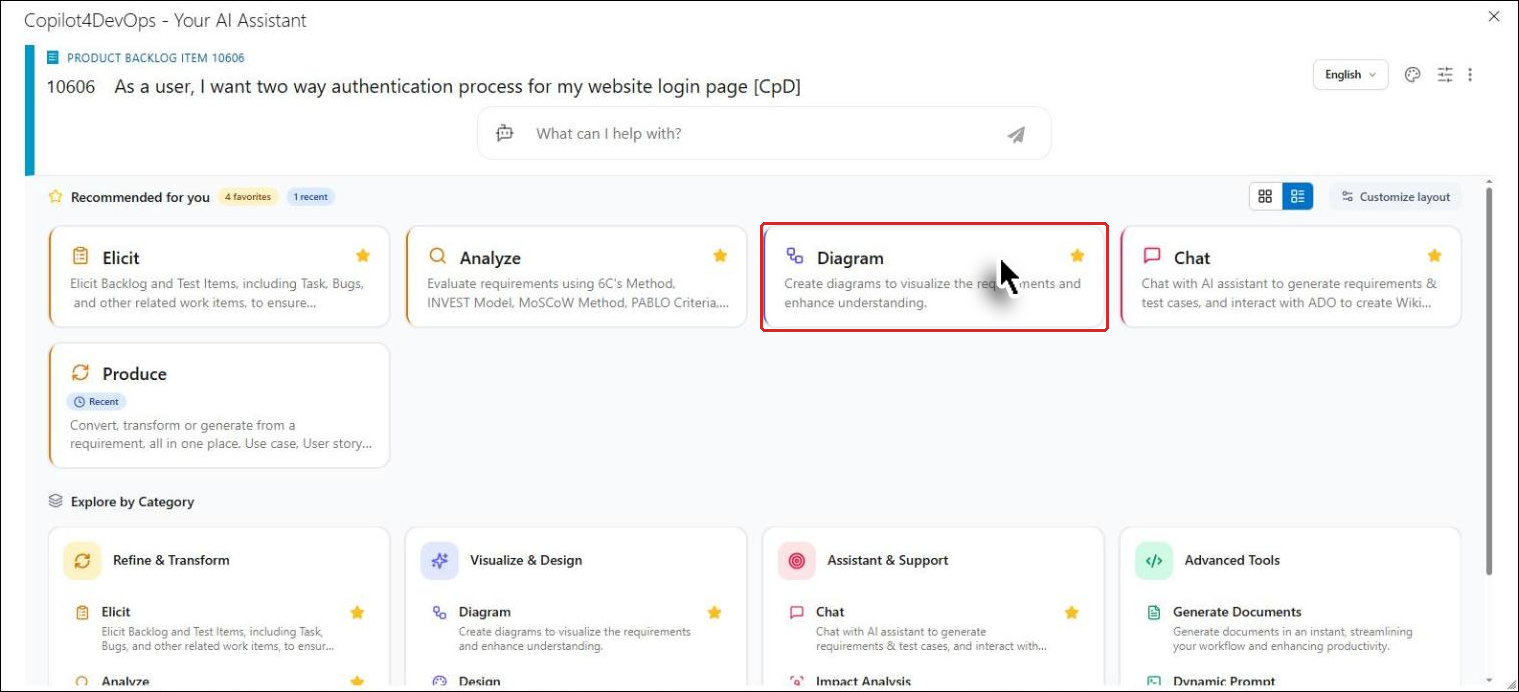
1. Users can access the Diagram feature from the Copilot4DevOps main page by clicking on the Diagram card. The Diagram card is also listed under Visualize & Design in Explore by Category.
This opens the Diagram interface with two initial tabs: "Prompt" and "Diagram", and a History Panel to access previously generated diagrams while the user is on any of the tabs. An Explanation tab is added once a diagram has been generated.
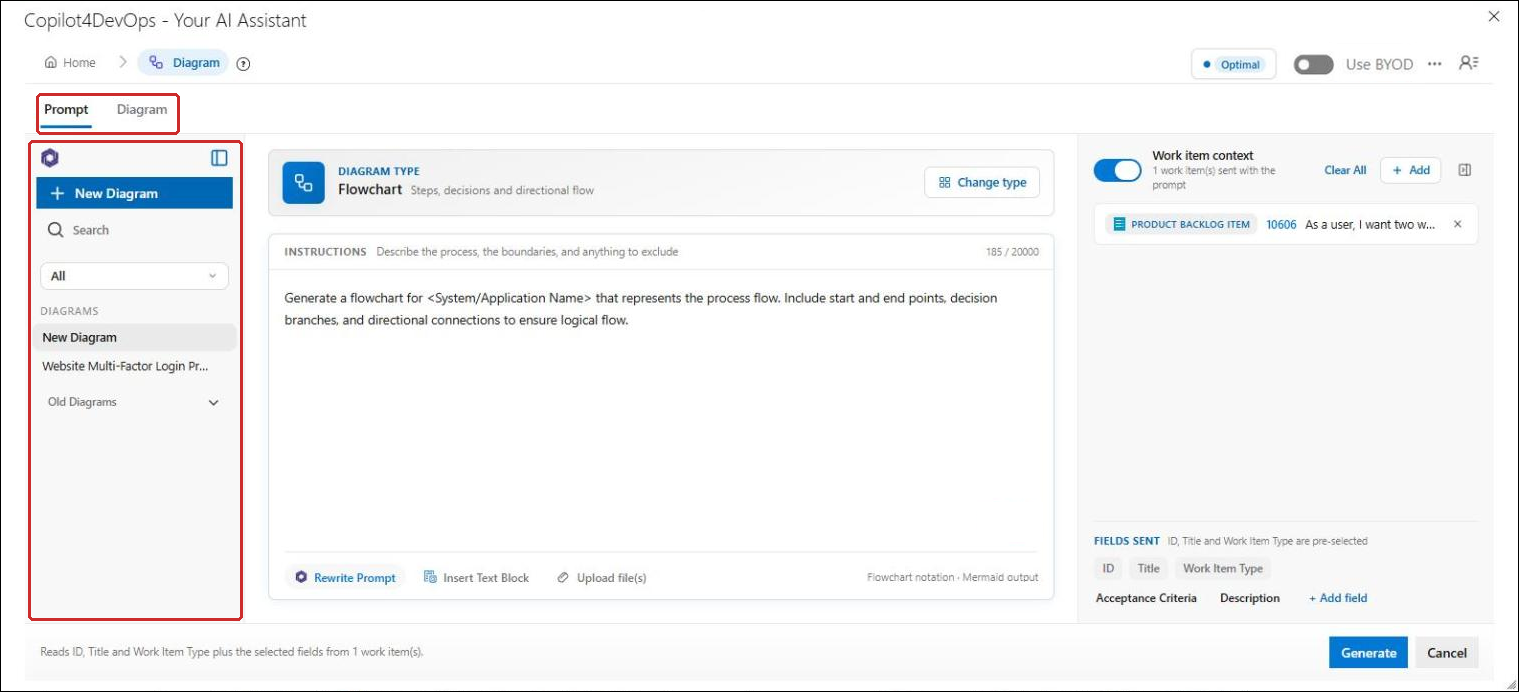
Prompt Tab UI
Diagram Type
The Diagram module supports a large array of diagram types. The selected type is shown in the DIAGRAM TYPE card at the top of the Prompt tab. By default, "Flowchart" is selected. To choose another type, click Change type.
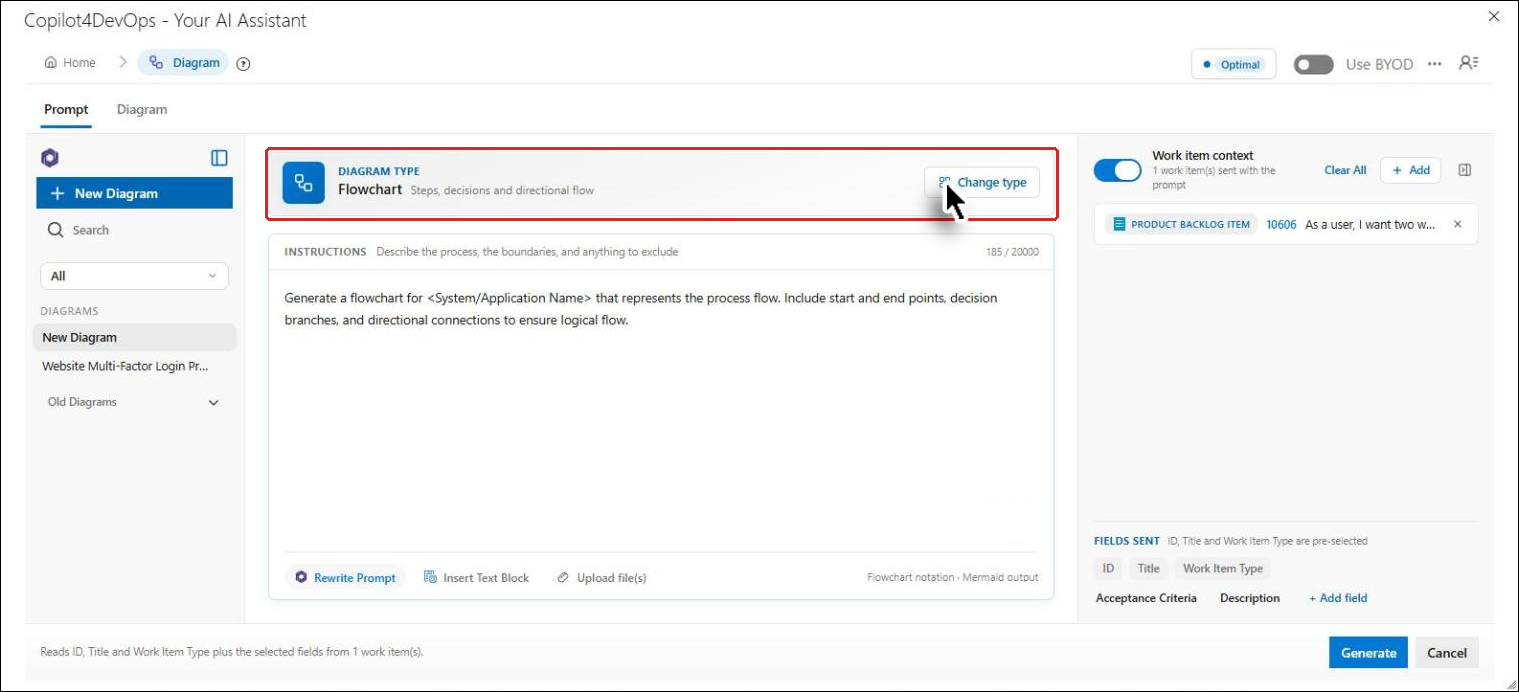
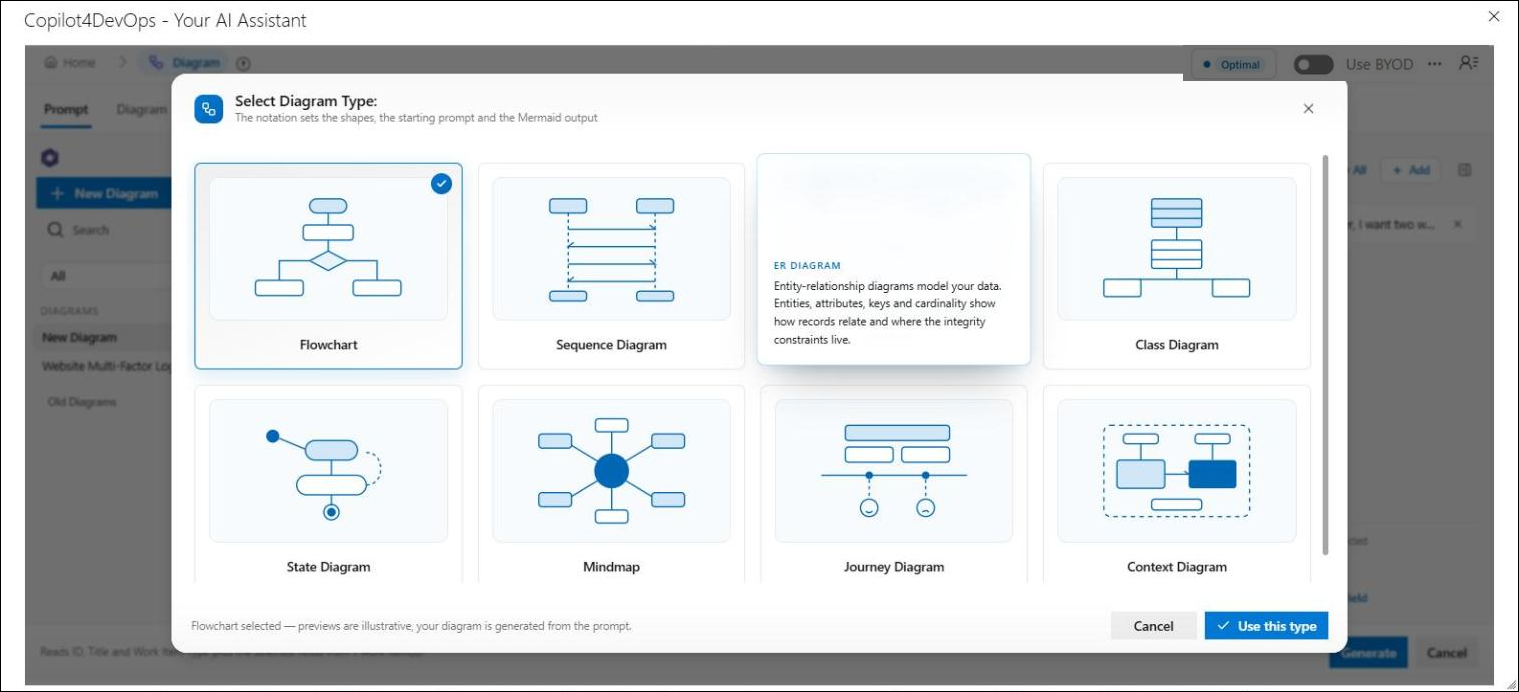
Clicking the option opens the Select Diagram Type window. Here you can choose which type of diagram you want to generate. Point to a type to see a short description of it, then click Use this type.
Instructions
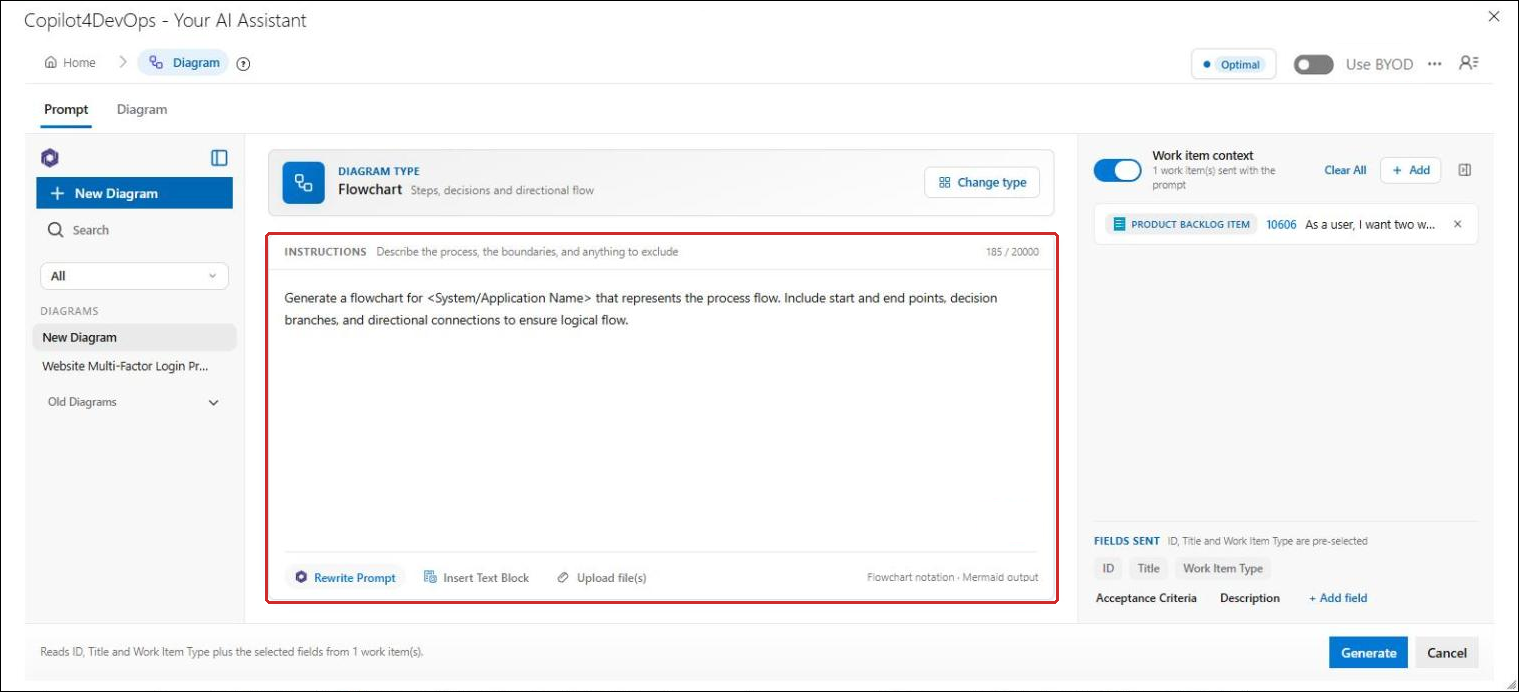
User can enter the prompt on the details of the diagram they want in the INSTRUCTIONS box, in the middle of the Prompt tab. The box shows a default prompt for the selected diagram type, and a character counter (up to 20000 characters). The Rewrite Prompt, Insert Text Block and Upload file(s) options are below the box.
Work Item Context
Users can select work items for context, which will influence the generated diagram. The Work item context panel on the right lists the work items sent with the prompt. Use + Add to select work items by ID or title, and Clear All to remove them. Under FIELDS SENT, users can choose specific fields to include.
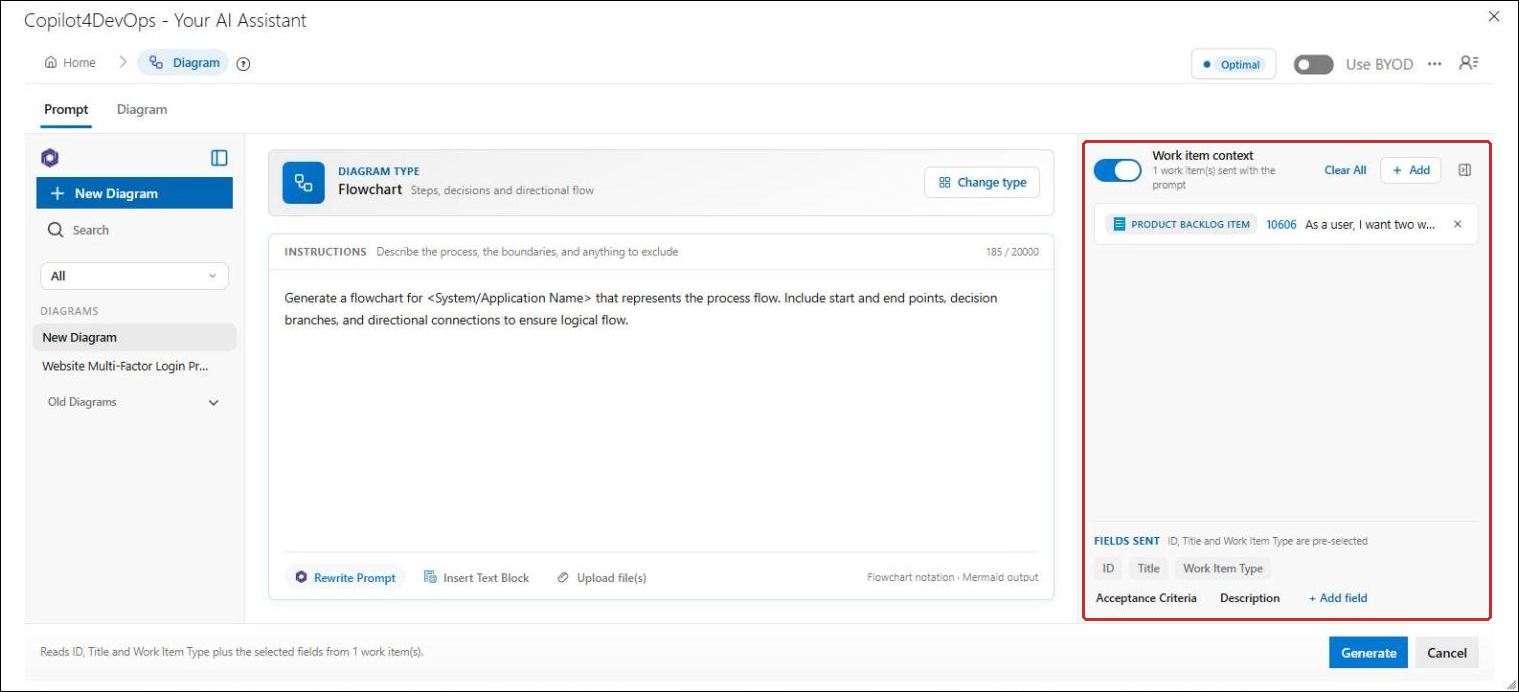
Note: The Fields in the bottom of the right panel will be selected by default in accordance to the work item type. Moreover, ID, Title, and Work Item Type are pre-selected fields which cannot be removed.
Top Bar Options
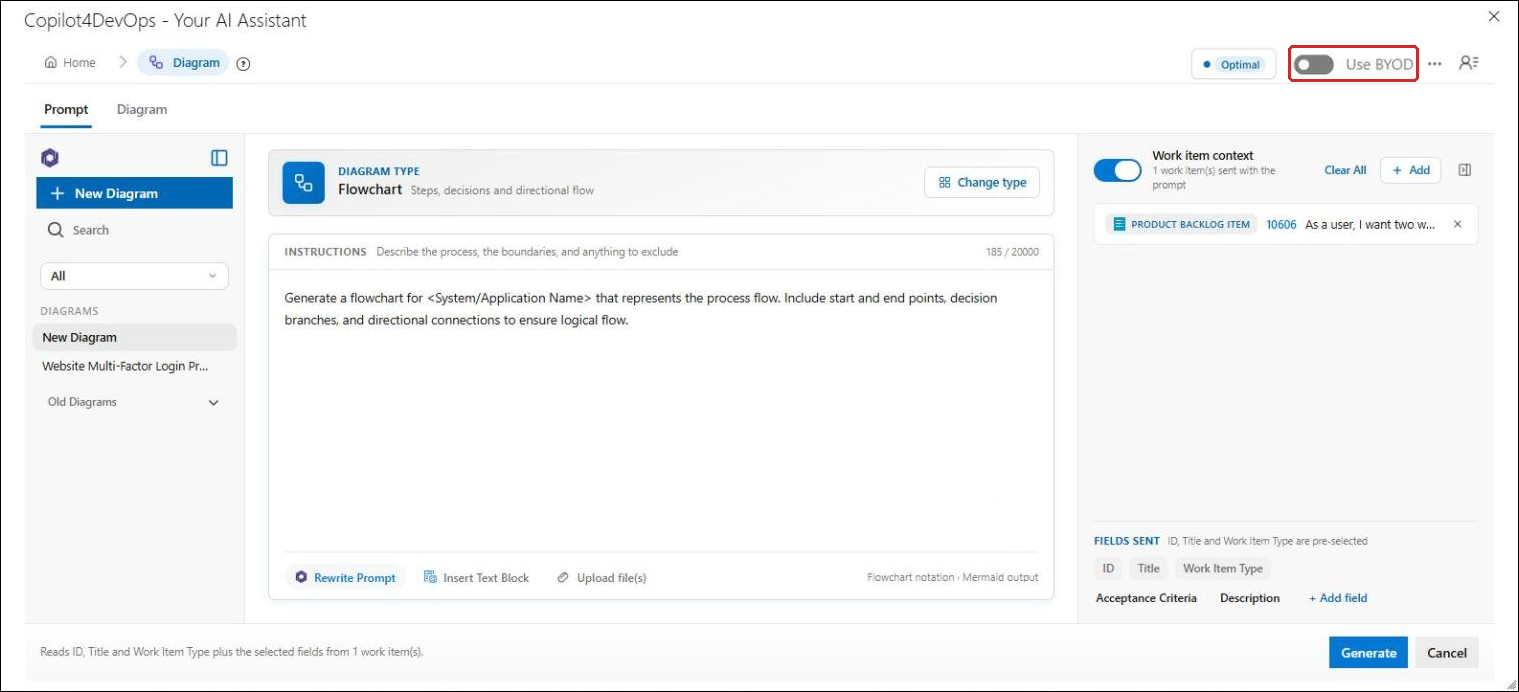
The top right of the Diagram interface shows the AI model label (Optimal), the Use BYOD toggle, the More options (⋯) menu and the Custom Instructions icon.
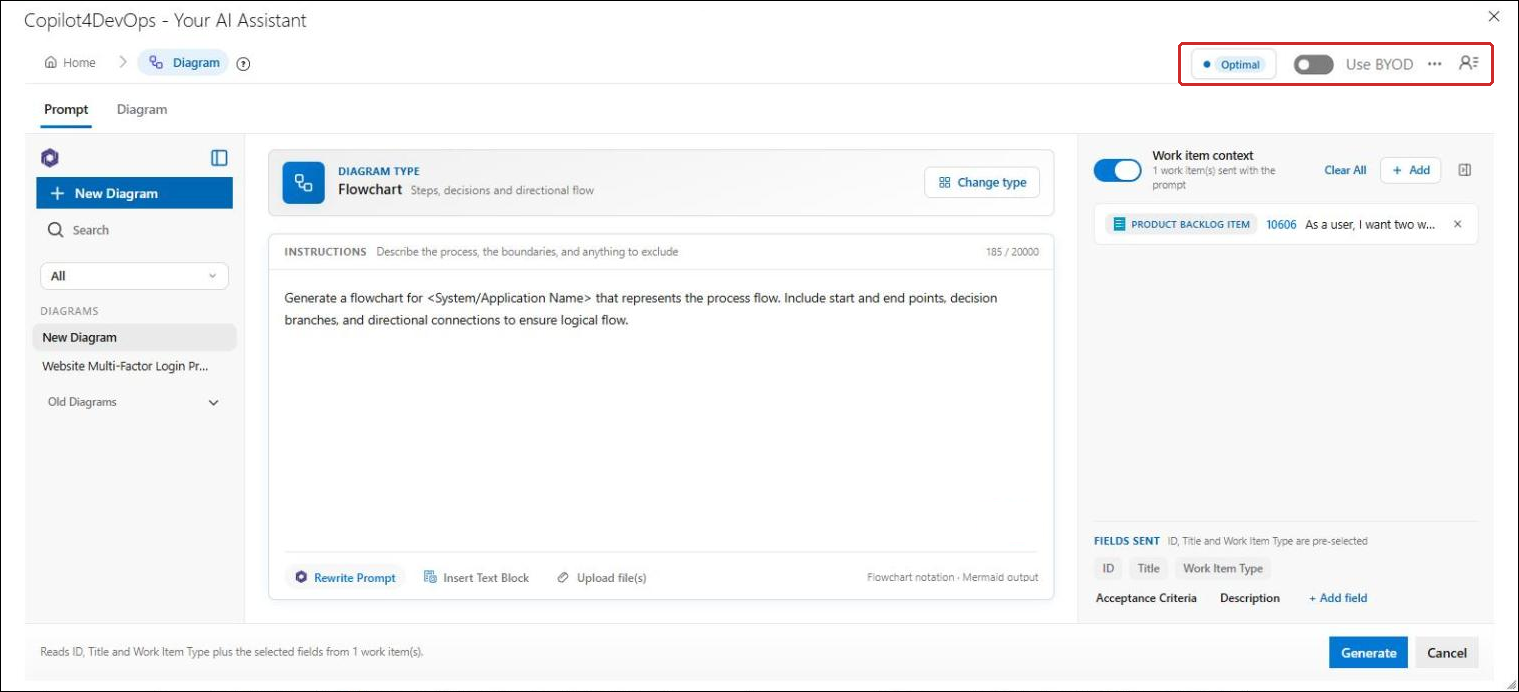
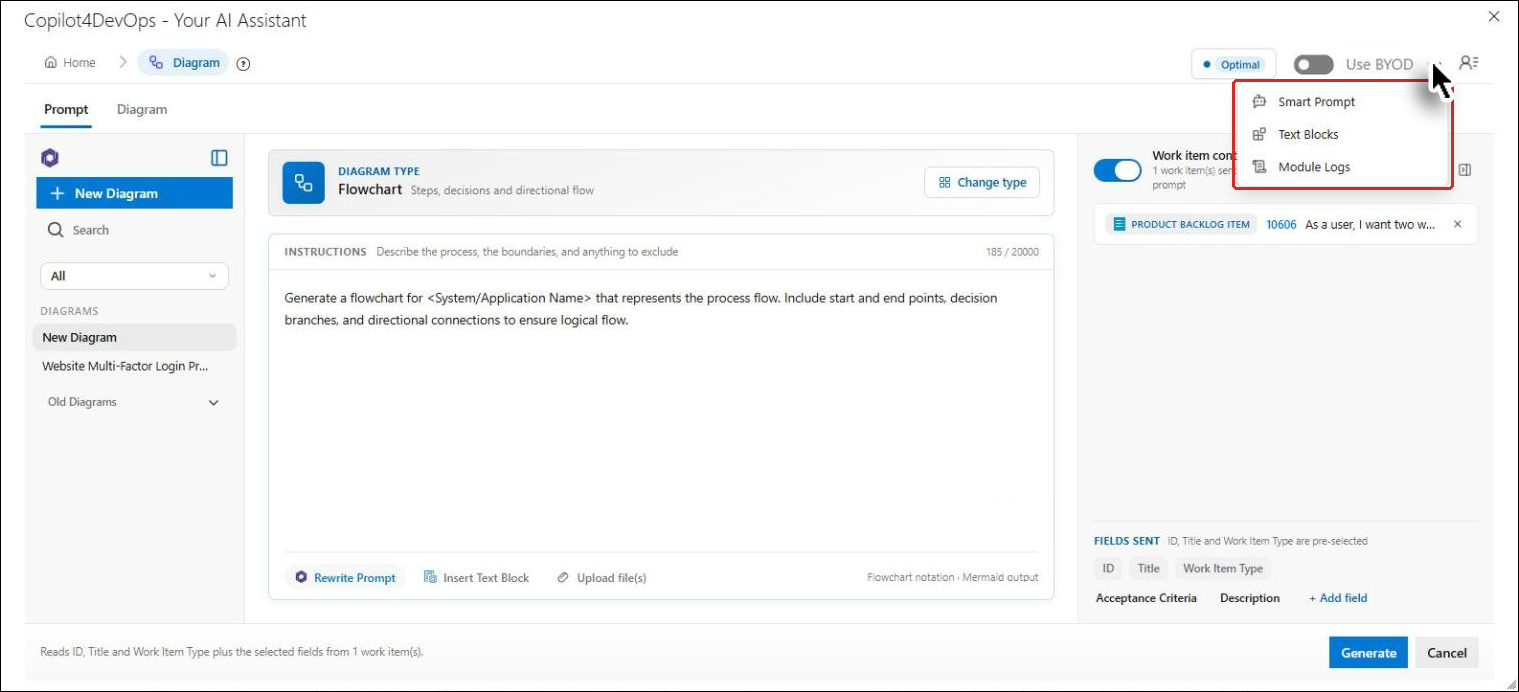
The ⋯ menu lists Smart Prompt, Text Blocks and Module Logs.
The Custom Instructions panel shows the AI service (locked by your organisation), Response language, Conversation style (More Creative, More Balanced, More Precise), Output length (Long, Medium, Short) and the following toggles:
Exclude work item images: Skip images embedded in work item fields.
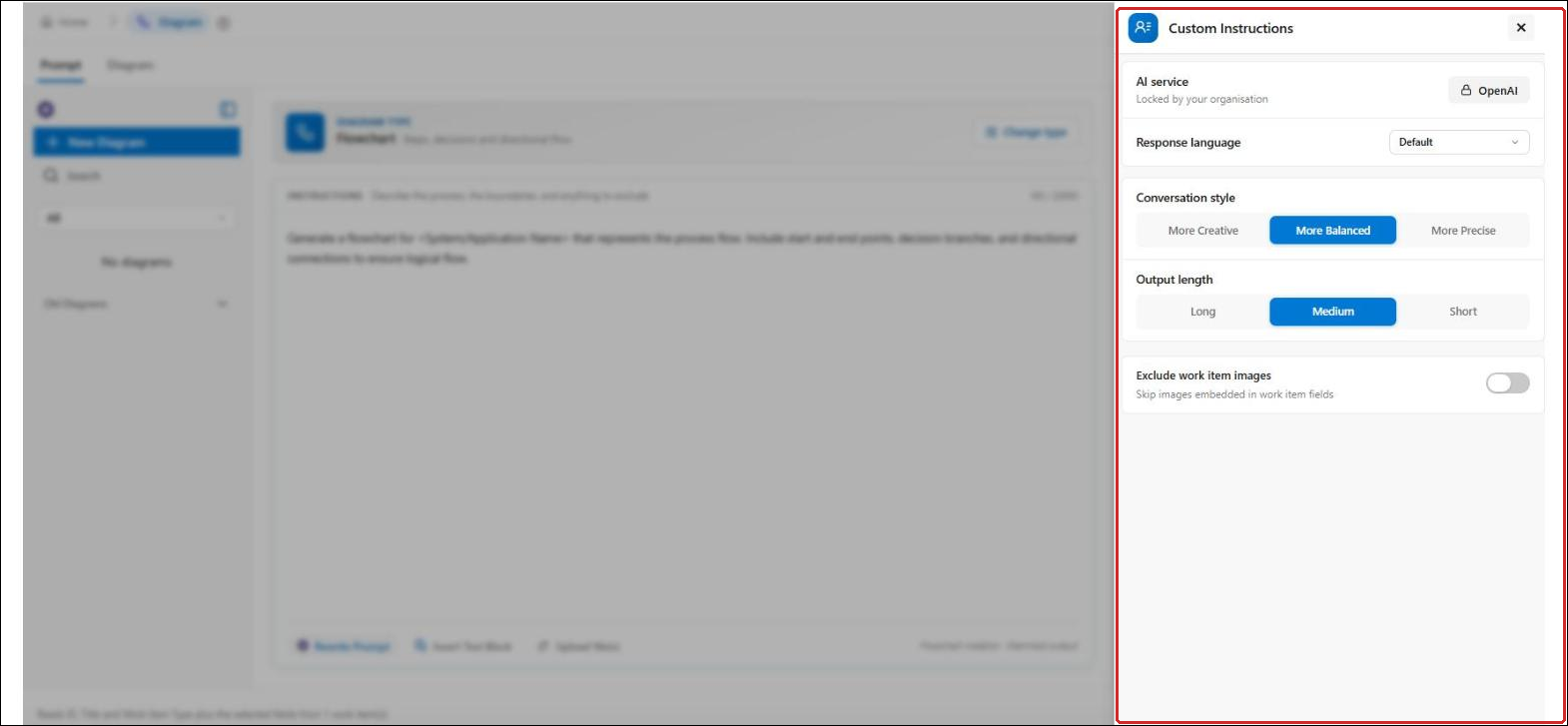
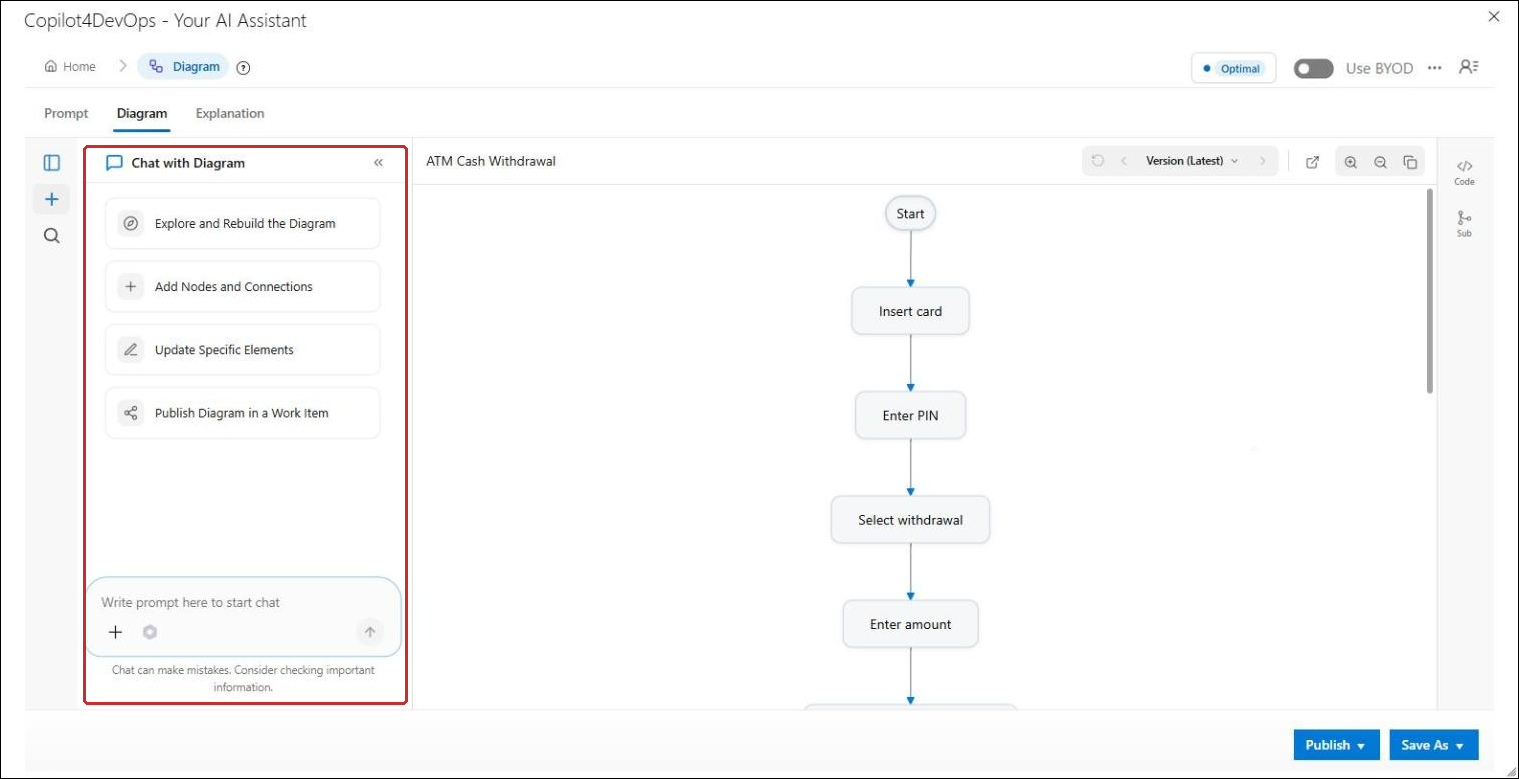
Diagram Tab UI
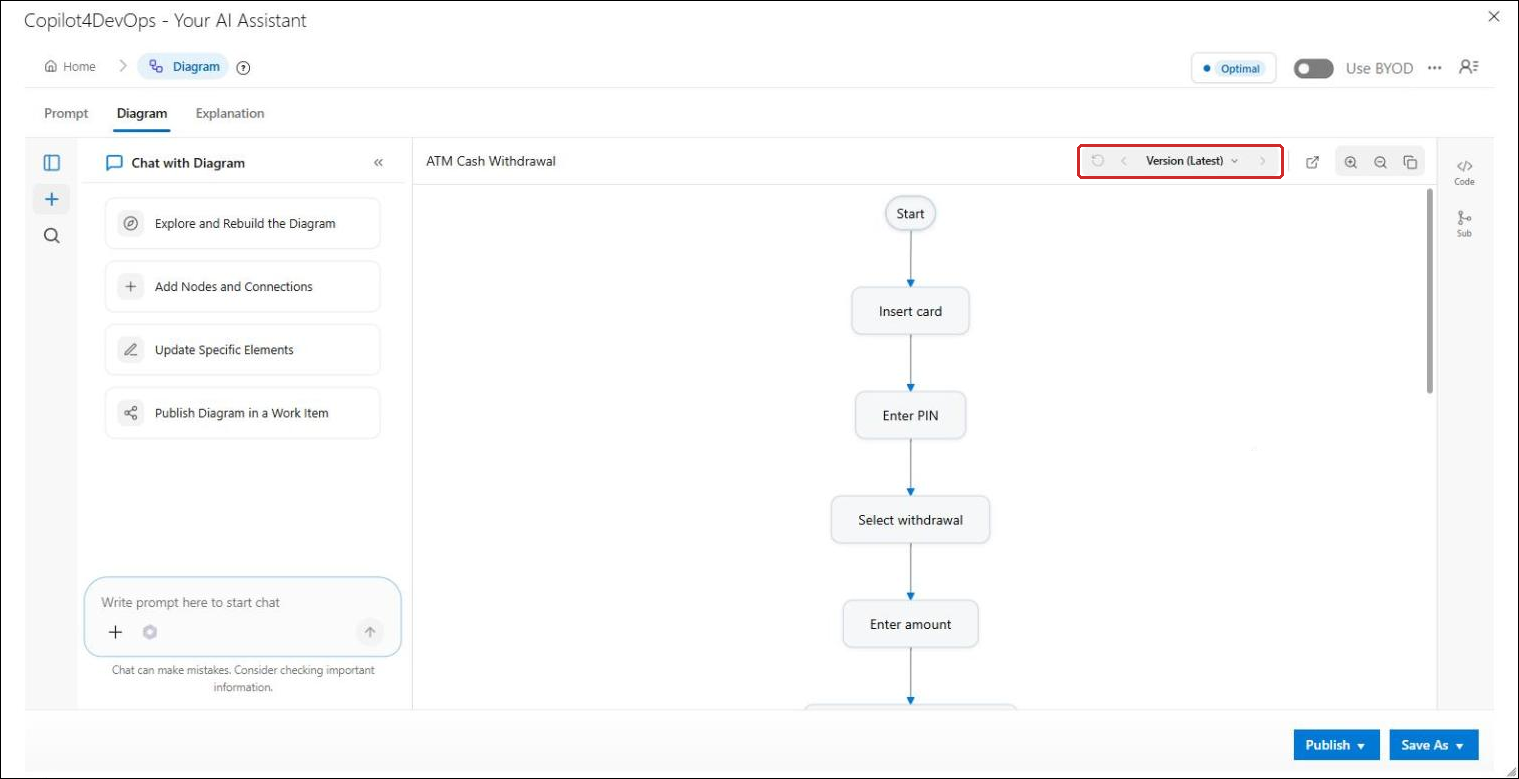
With the "Chat with Diagram" panel users can explore and rebuild their diagrams, add nodes and connections, and any other modification with a lot of ease.
The generated diagram is displayed in the center of the Diagram tab.
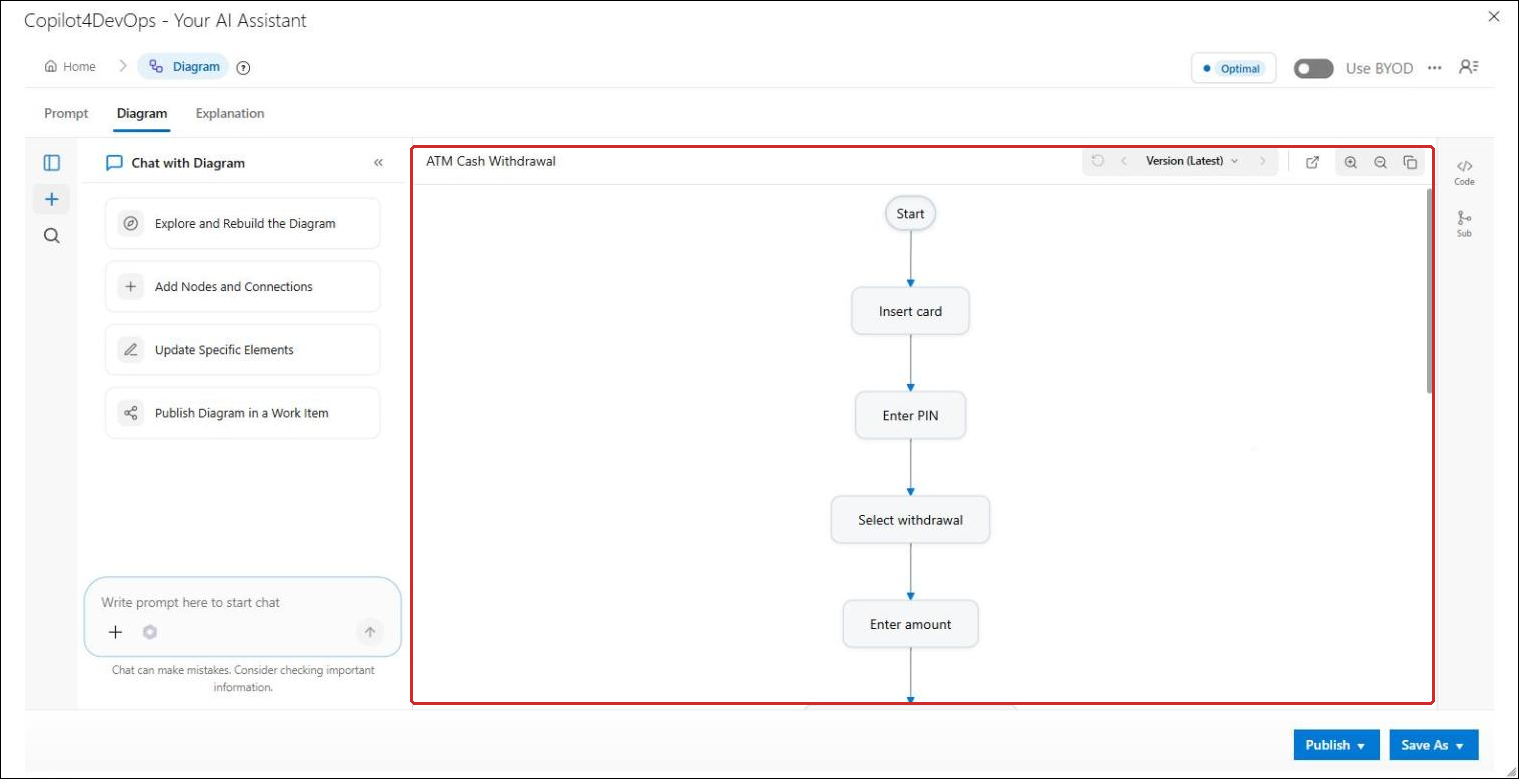
With every modification or update to the diagram, the Diagram feature registers a new version and users can go back and forth to previous and new versions using the version management option.
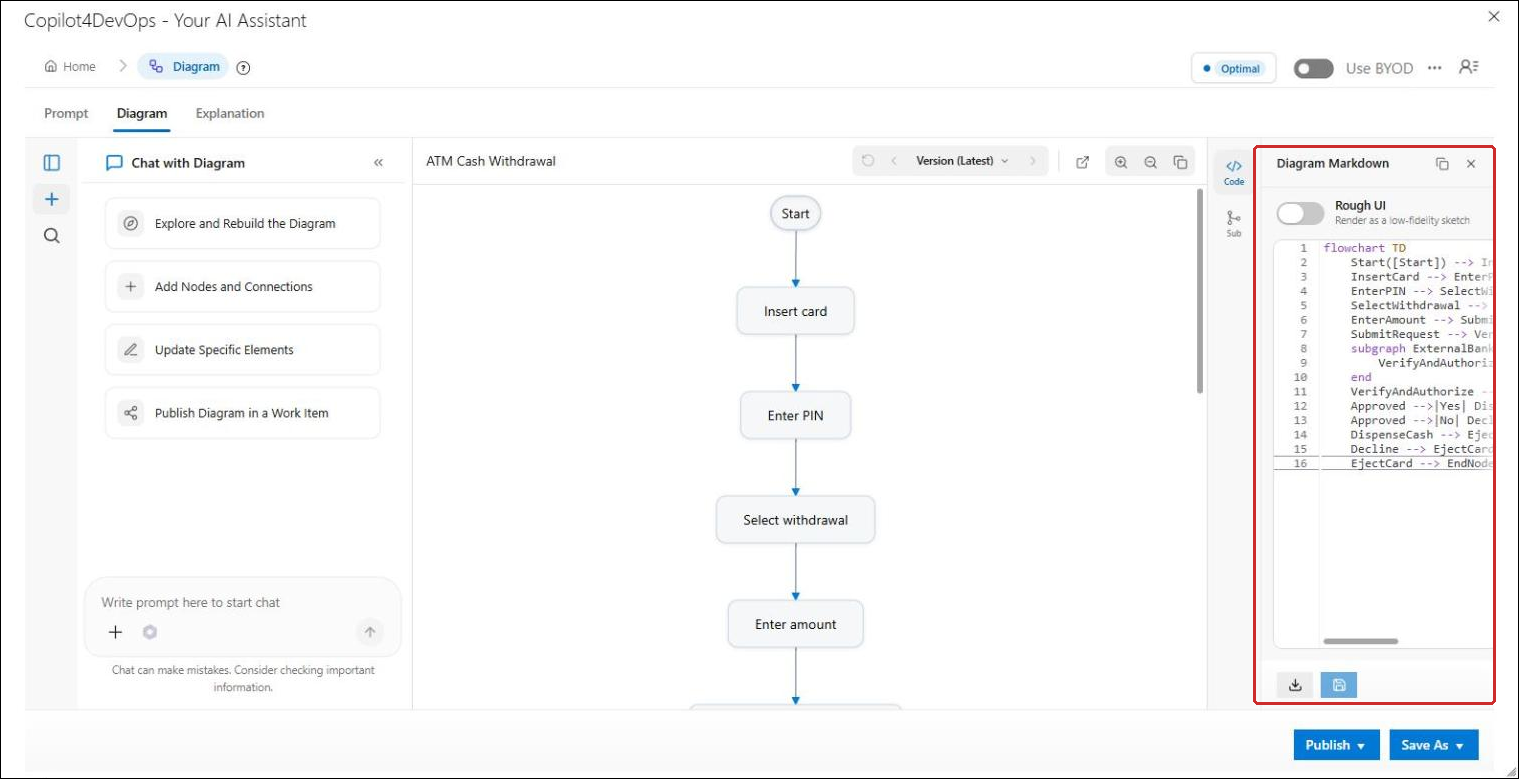
On the right side of the Diagram tab, the Code button opens the Diagram Markdown panel. Users can use this panel to modify the diagram using the Mermaid Code. The Sub button below it opens the Sub Diagrams panel (see Sub Diagrams).
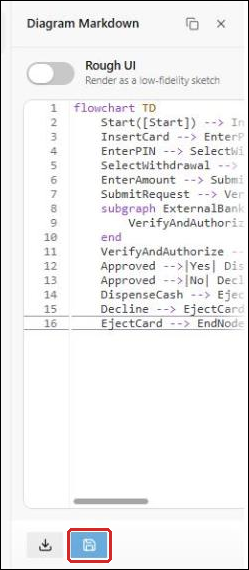
The Save option at the bottom of the panel makes a version update using the Diagram Markdown.
Explanation Tab
Generating the explanation
The Explanation tab only becomes visible when a diagram has been generated. Initially it is empty: the user generates the explanation by clicking the generate link.
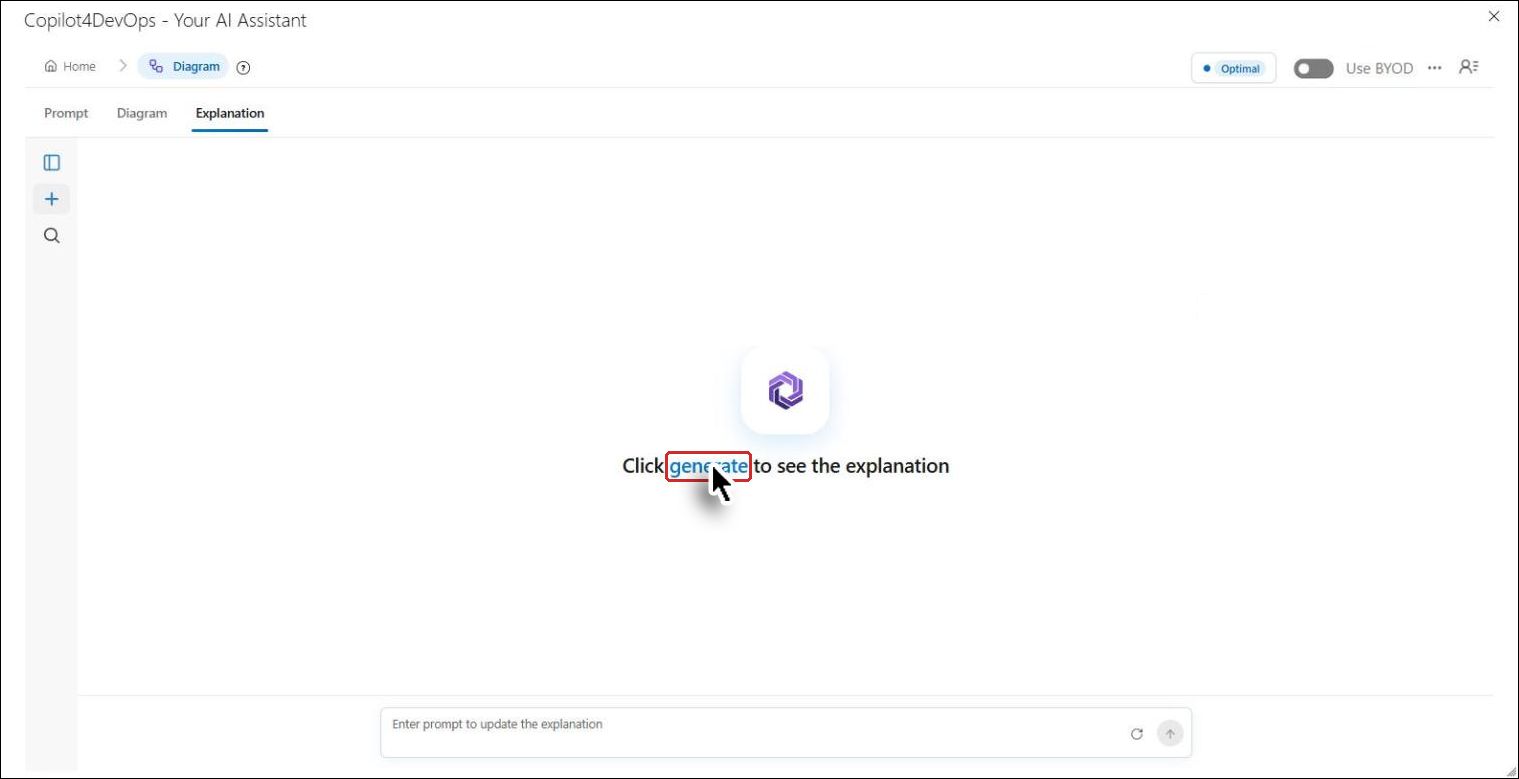
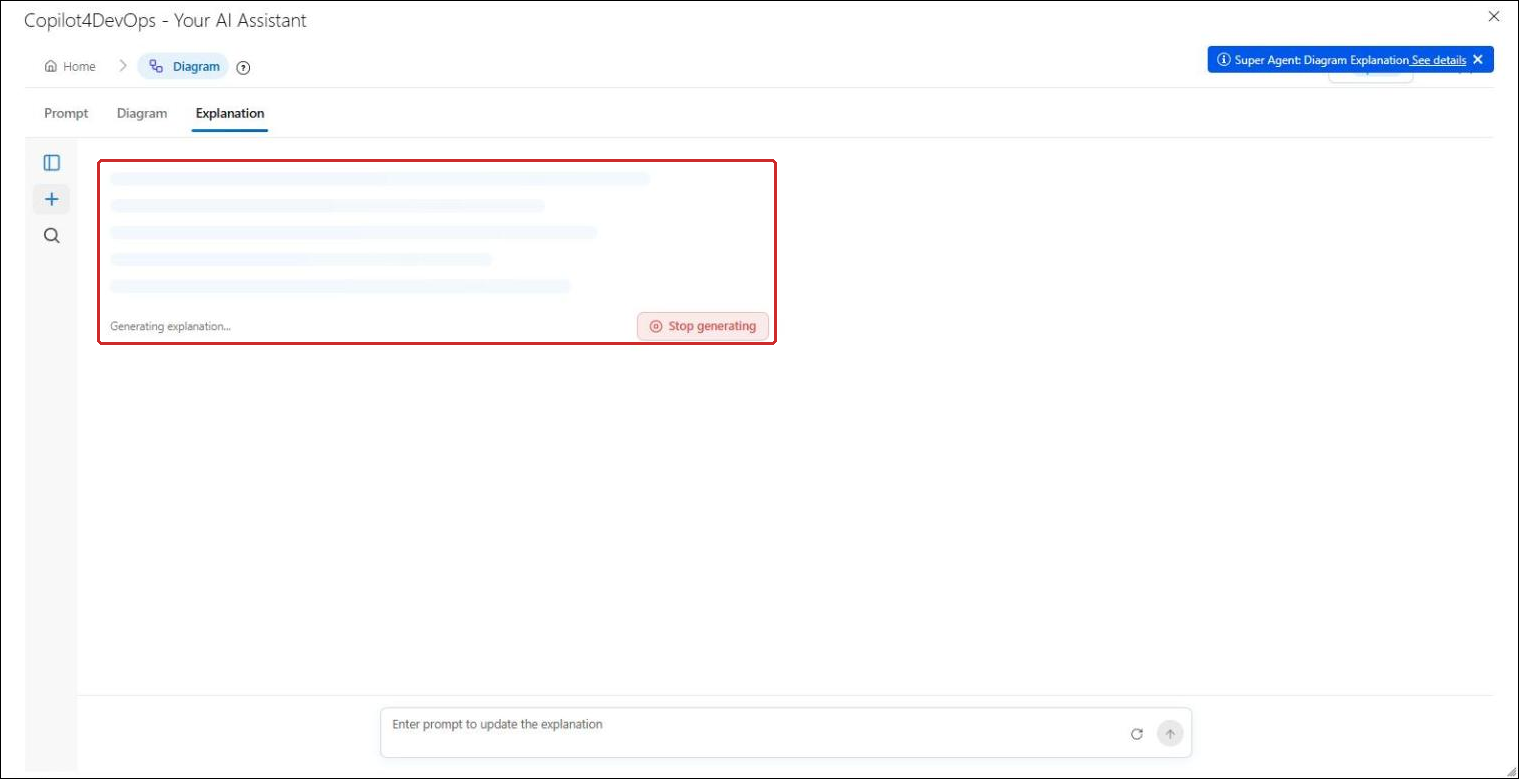
While the explanation is being generated, "Generating explanation..." is shown with a Stop generating button.
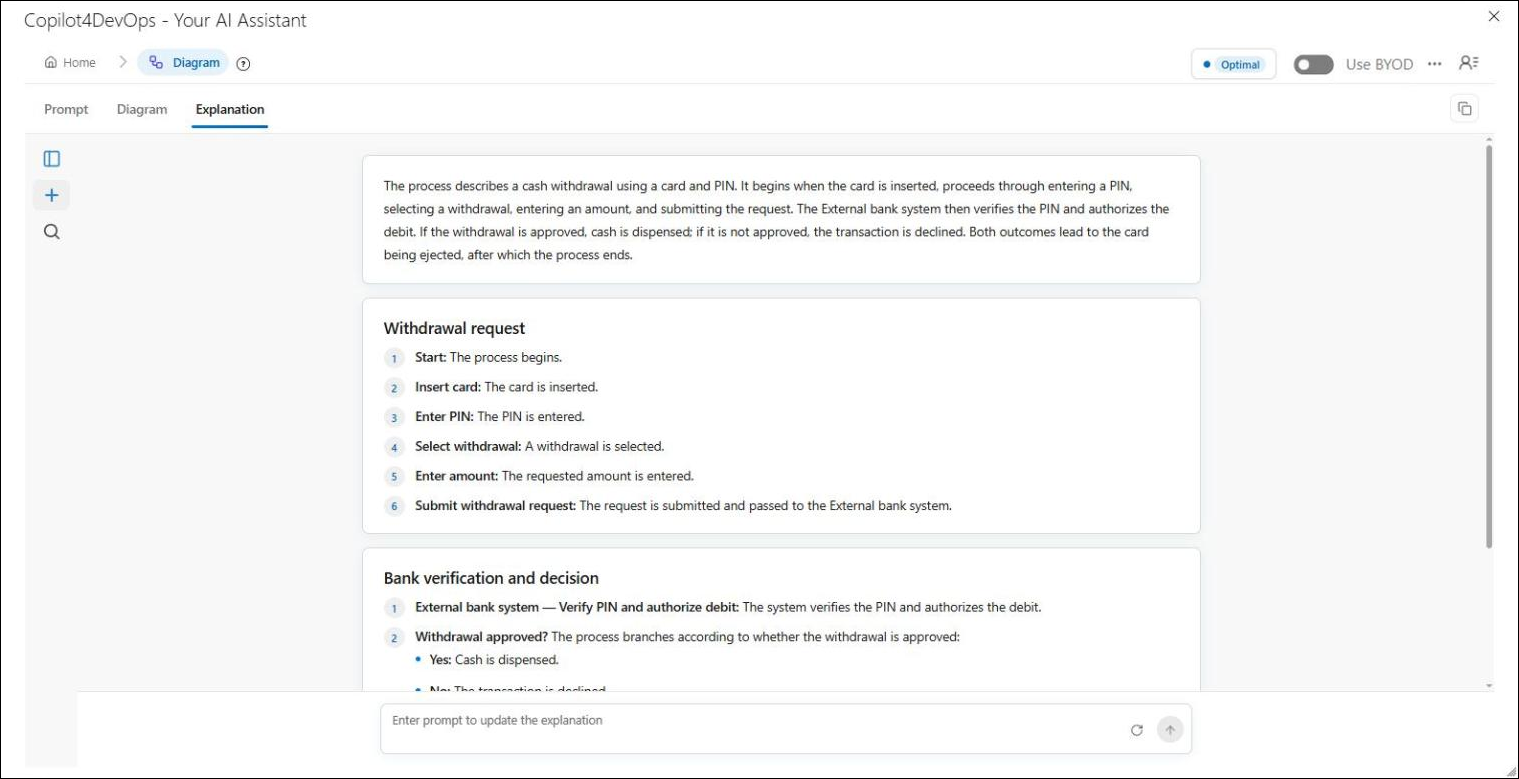
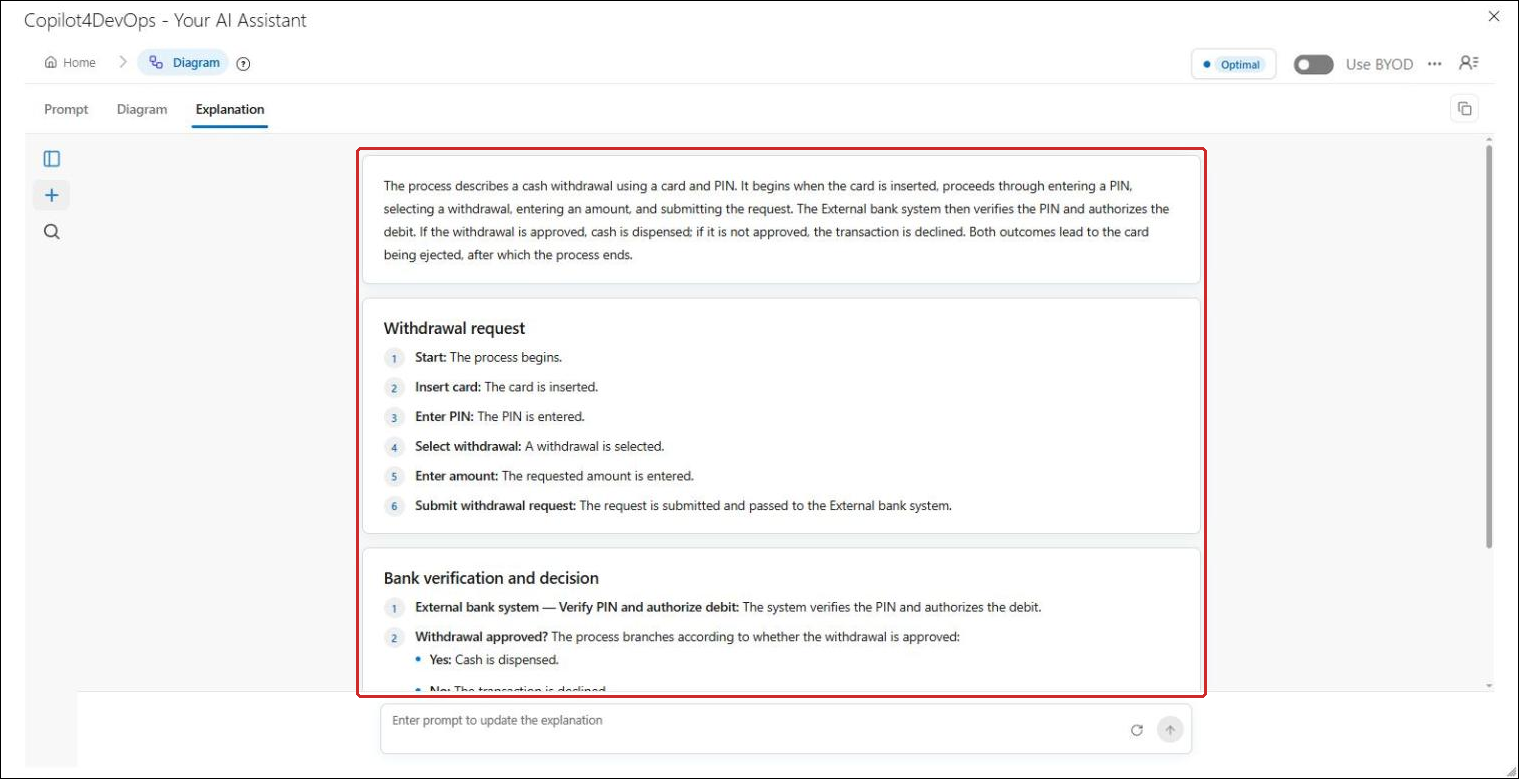
Explanation Tab details
In the Explanation tab, users can generate and view the explanation for their diagram.
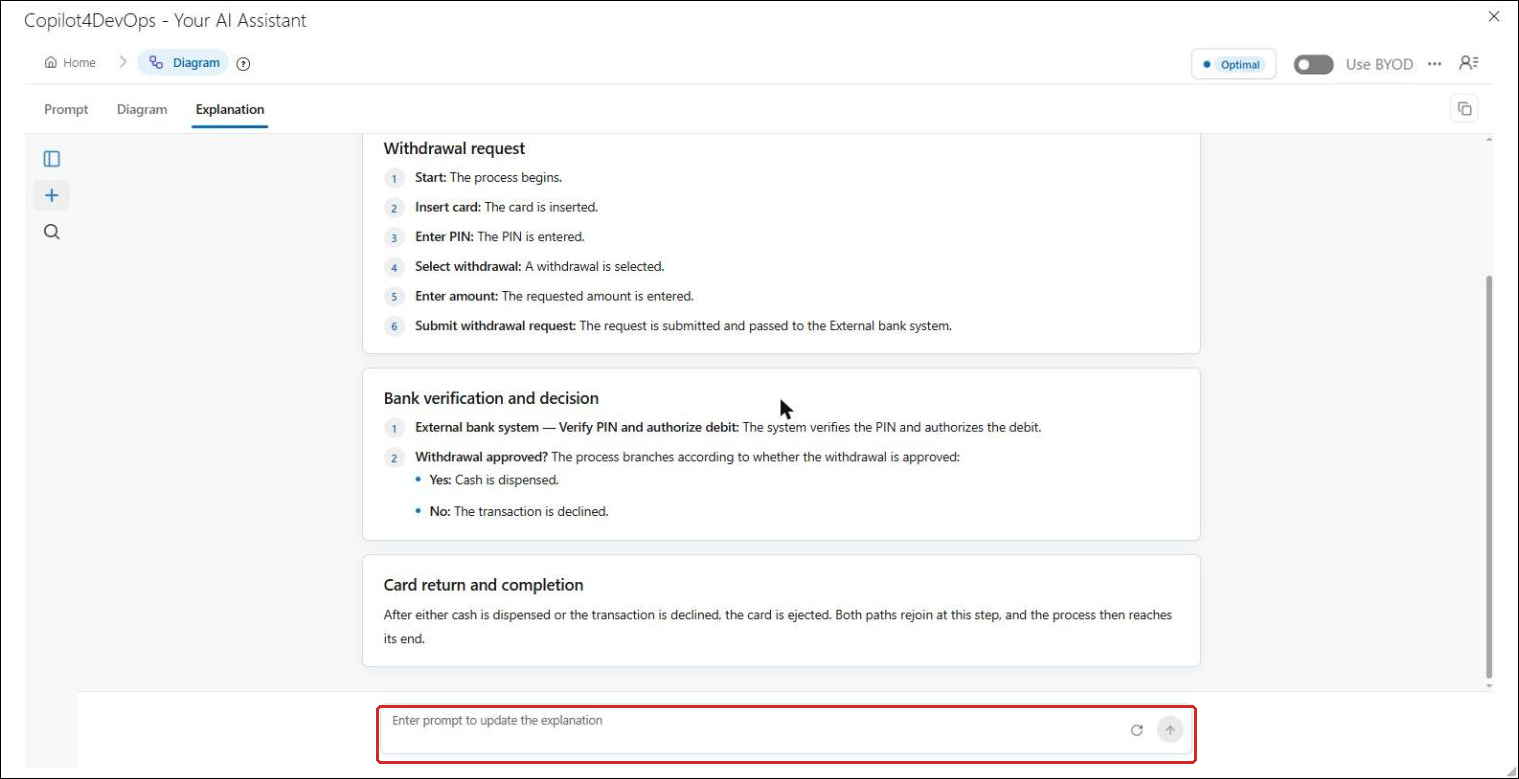
With the Prompt option at the bottom, users can enter a prompt to update the explanation for the diagram.
History Panel UI
History Panel sidebar is accessible in both Prompt and the Diagram tab. At any point of time users can access any previously generated diagram without any hassle. On the Diagram and Explanation tabs, the panel is collapsed to a narrow bar; click its panel icon at the top to expand it.
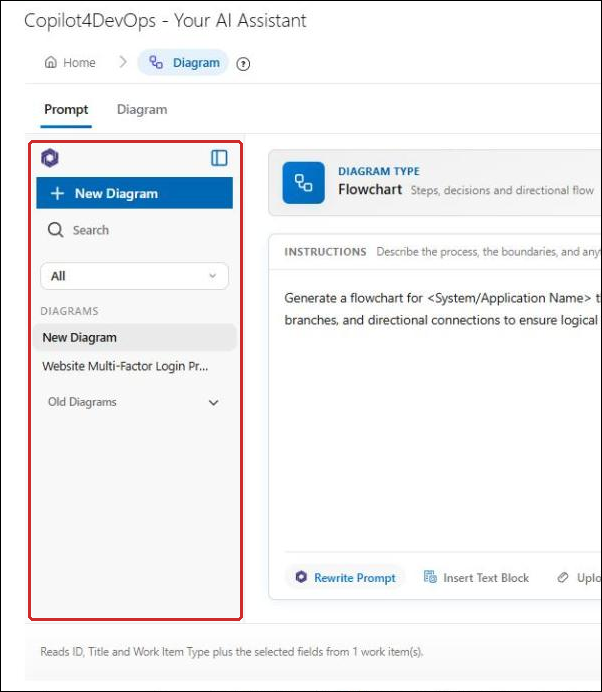
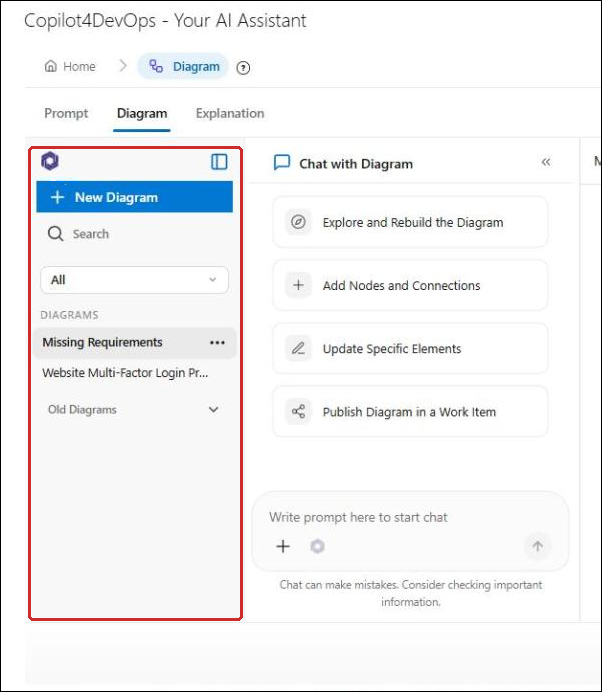
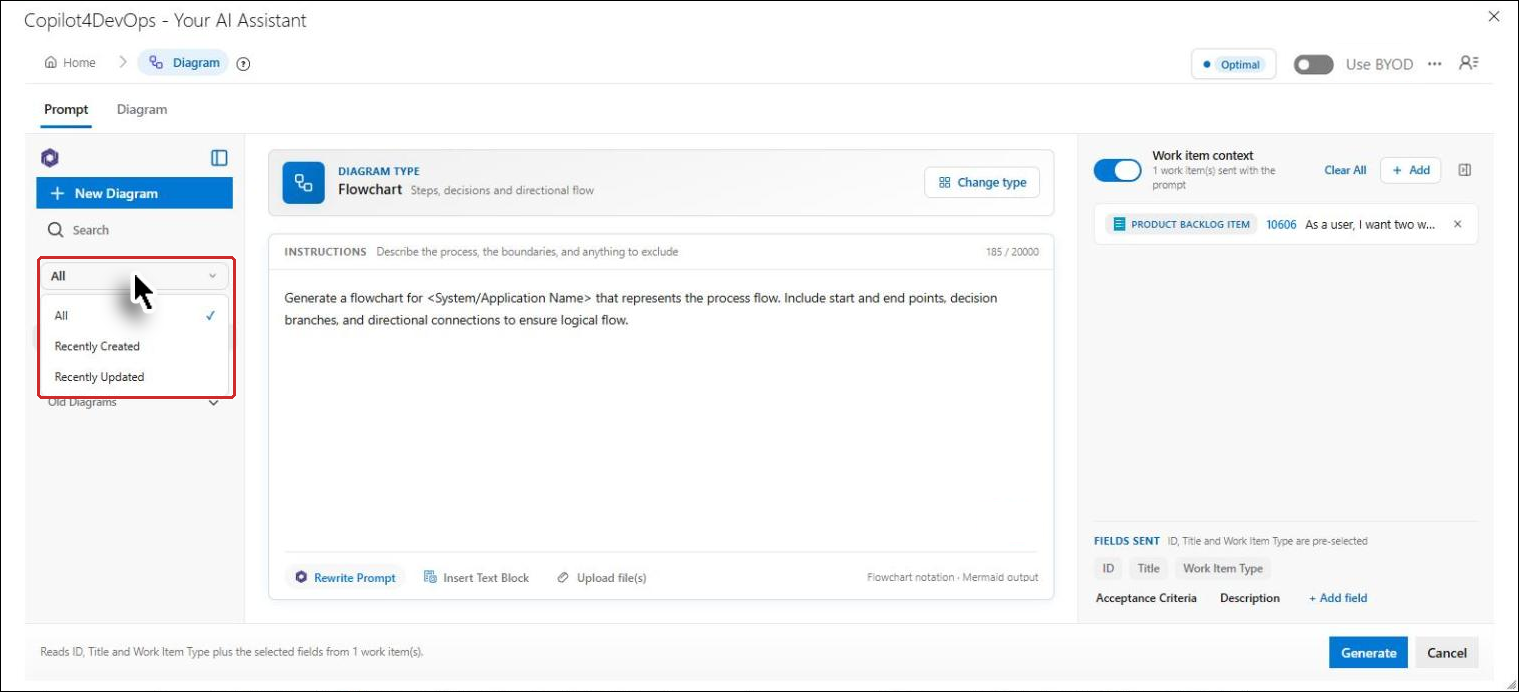
Users can access their desired diagrams from the history panel using the filters: All, Recently Created and Recently Updated.
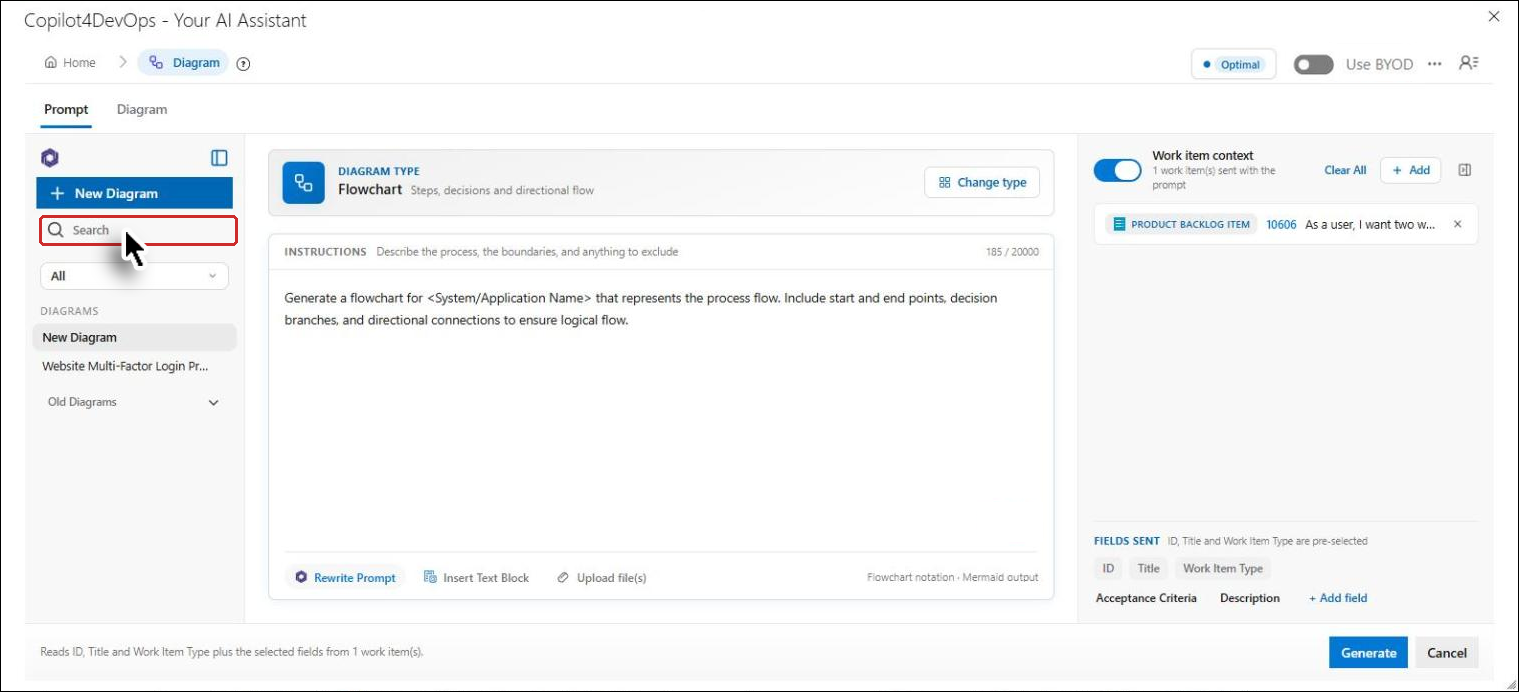
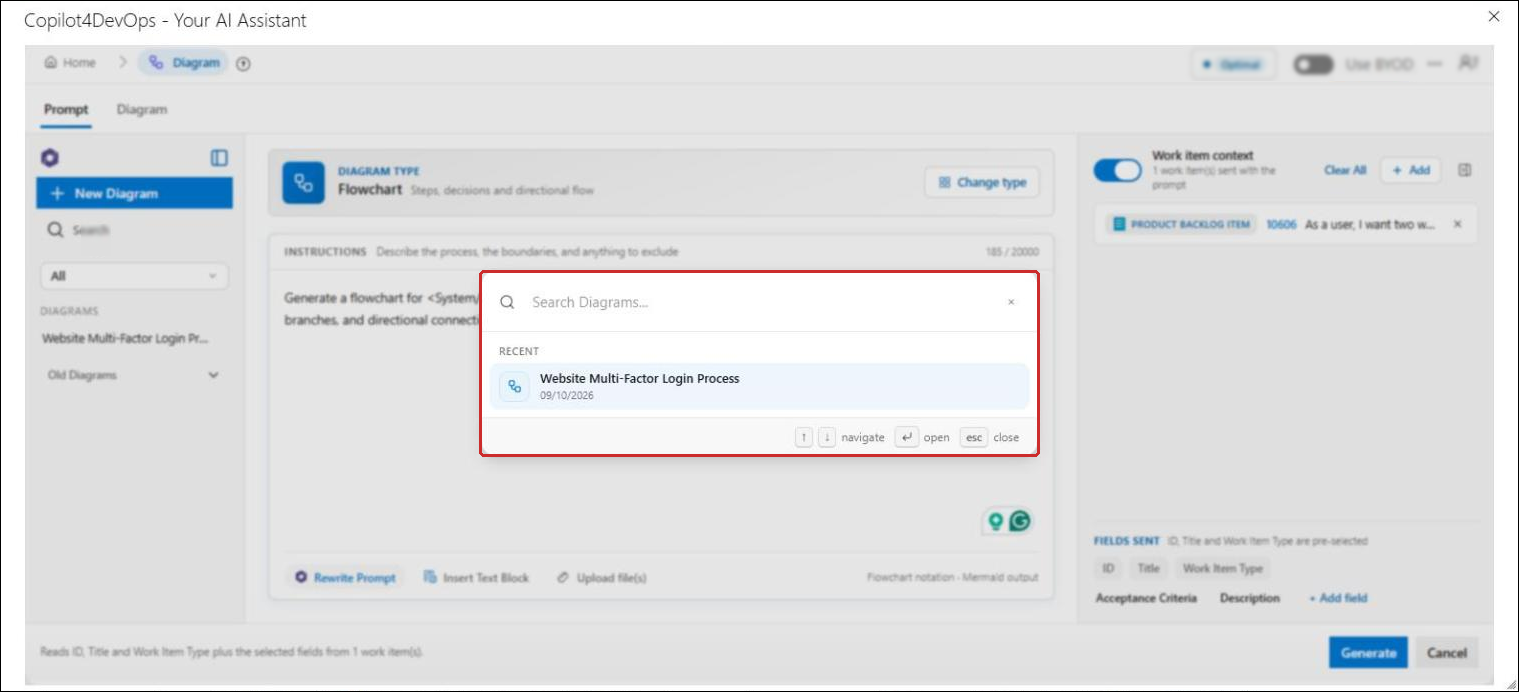
With the search option, user can quickly search for a particular diagram. When the Search option is clicked, a Search Diagrams popup window appears.
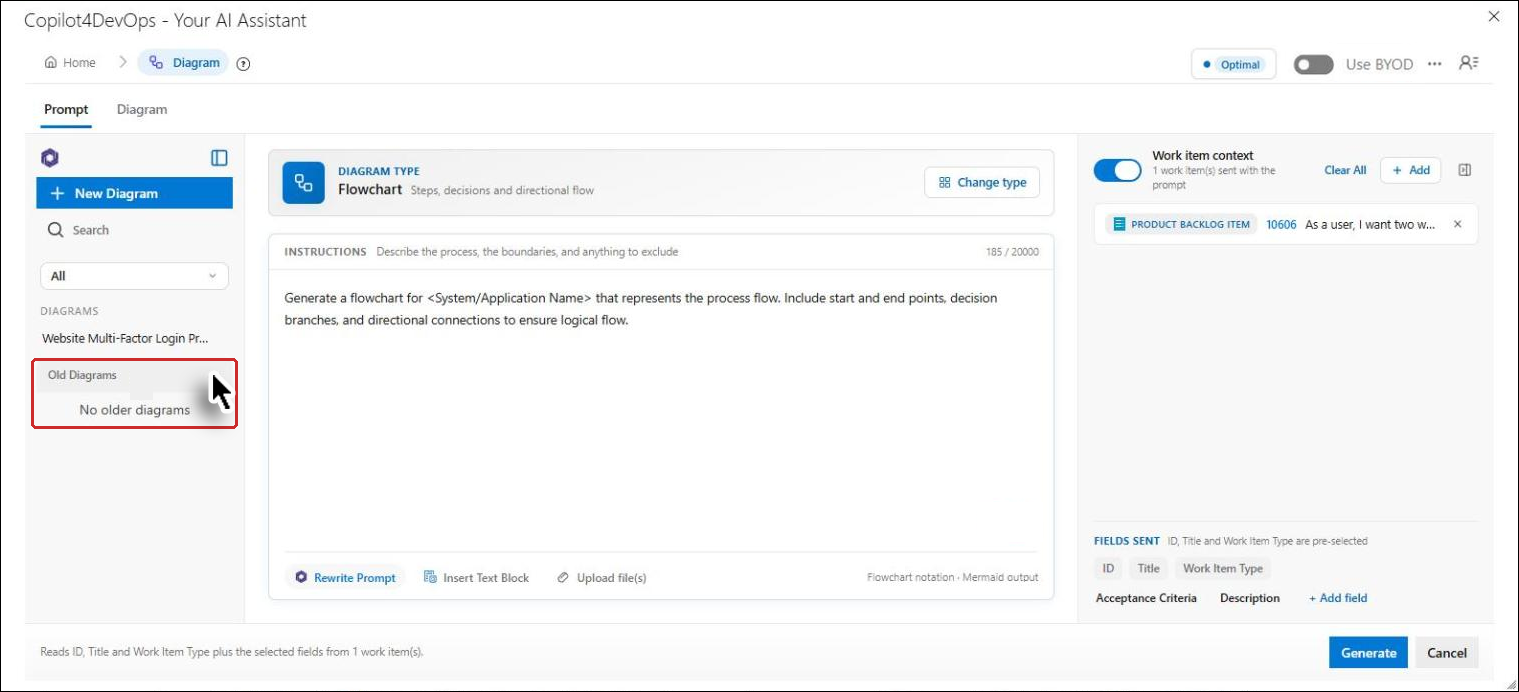
Diagrams that were generated 30 Days ago or more can be seen and accessed from the Old Diagrams option.
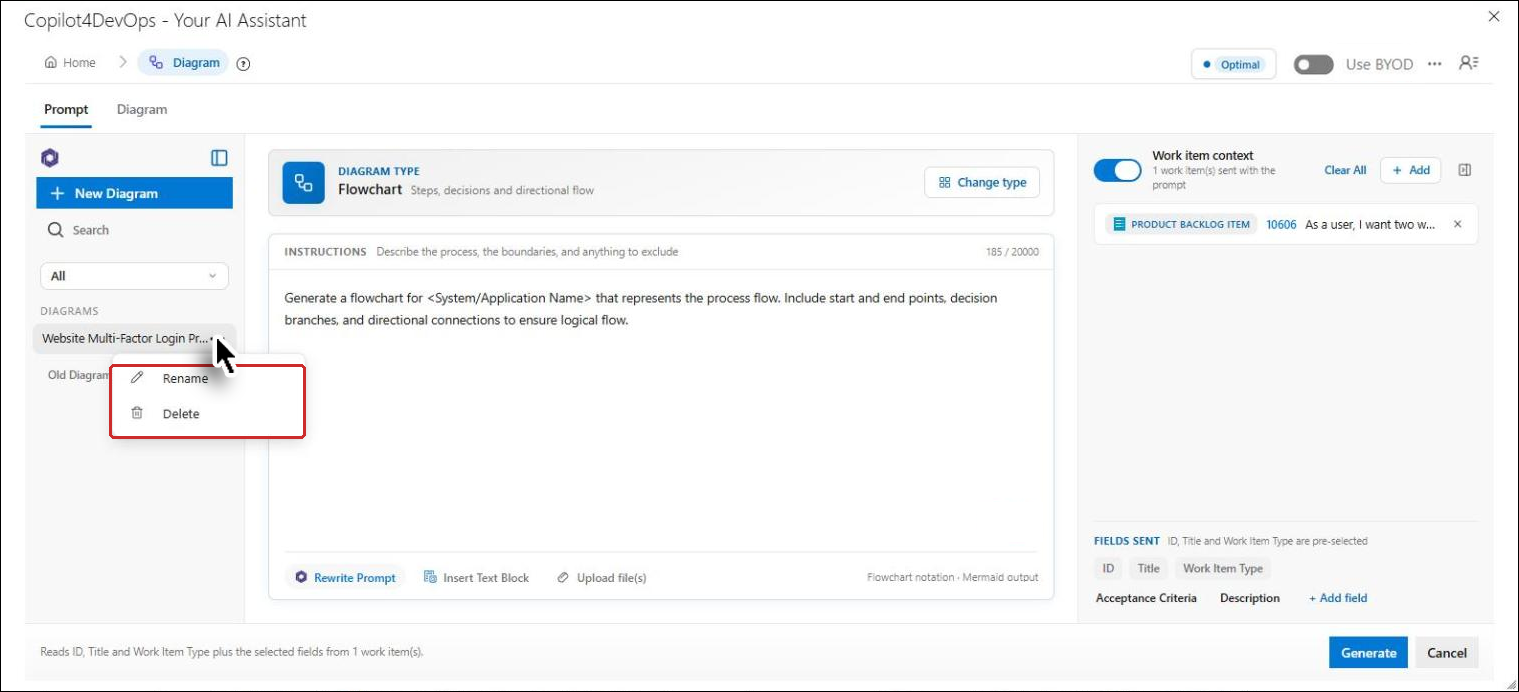
By clicking on the (...) option just next to a diagram in the history panel, users have the option of renaming and deleting a diagram.
Enable 'Use BYOD'
Enable the Use BYOD toggle. This allows you to access data previously uploaded through the admin interface, which the AI will use to generate tailored outputs based on your uploaded data.