

AI-Powered Requirements Gathering Inside Azure DevOps
Use AI to capture complete, high-quality requirements in minutes — automatically transform notes, documents, and existing work items into ready-to-use user stories and test cases.

Trusted by the world’s leading businesses













Requirements elicitation was broken. We fixed it.
The old way
- I’m always spending hours preparing work items.
- I often miss edge requirements.
- I write requirements manually or use ChatGPT to generate them, then copy-paste them into Azure DevOps.
- I update requirements manually and spend days on that.
- I’m not able to write requirements in a consistent format.
The new way with Elicit
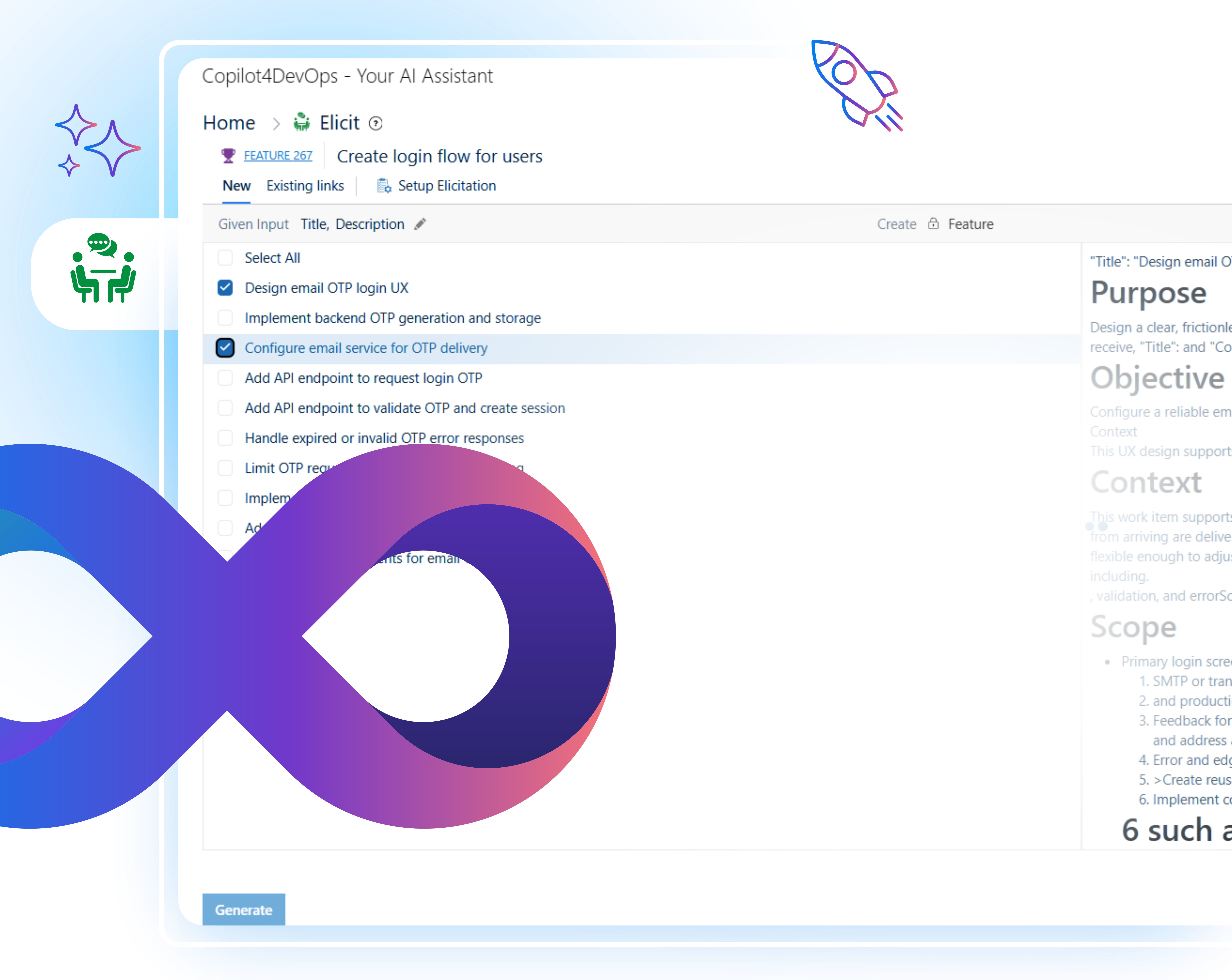
- AI extracts requirements from existing notes, files, or references and adds them to Azure DevOps.
- The system highlights variations and edge cases during generation.
- Elicit generates requirements directly within Azure DevOps and links to existing work items.
- "Personal priorities on tasks let everyone know what's on deck!"
- AI edits and updates requirements within seconds.
- Copilot4DevOps provides shared text blocks and lets users store custom rules that can be used when generating requirements to achieve consistent output.
A closer look at Elicit
The Elicit feature of Copilot4DevOps is designed to support teams during the planning and requirements stage of product development. It helps teams quickly prepare requirements from meeting summaries, notes, or related reference documents using an AI.
Across industries, from software and finance to healthcare and automotive, Elicit adapts to the language and structure each domain requires. It can draft compliance requirements, build safety test scenarios, or outline business features with the same precision and add them directly within Azure DevOps. The result is a clear, connected backlog that shortens planning cycles.
Here is how different job roles are using the Convert module within Azure DevOps
Product Owner
Refine work items directly within Azure DevOps during sprint planning and backlog grooming without wasting hours.

Developer
Automatically write user stories with acceptance criteria from high-level Azure work items, such as epics and features.

Business Analyst
Draft requirements within Azure DevOps using AI, from meeting summaries, feedback emails, to specification documents, without starting from scratch.
DevOps Engineers
Create testing and deployment-related tasks to implement the DevOps pipeline.

Scrum Masters
Simplify backlog refinement sessions with structured, AI-assisted work items that align team discussions and sprint goals.

QA Engineer
Develop test suites, test plans, and test cases directly from user stories. It helps in covering edge cases and improving coverage.
UX Designers
Generate subtasks from high-level requirements and given context for preparing the UI/UX of the product.
Project Manager
Write down feedback requests and responses, or create a code review request and attach it to Azure work items.

Compliance or QA Leads
Automatically create compliance requirements (without missing any) based on various regulatory standards. This helps ensure products meet regulatory standards.
Core capabilities of the Elict Module at a glance
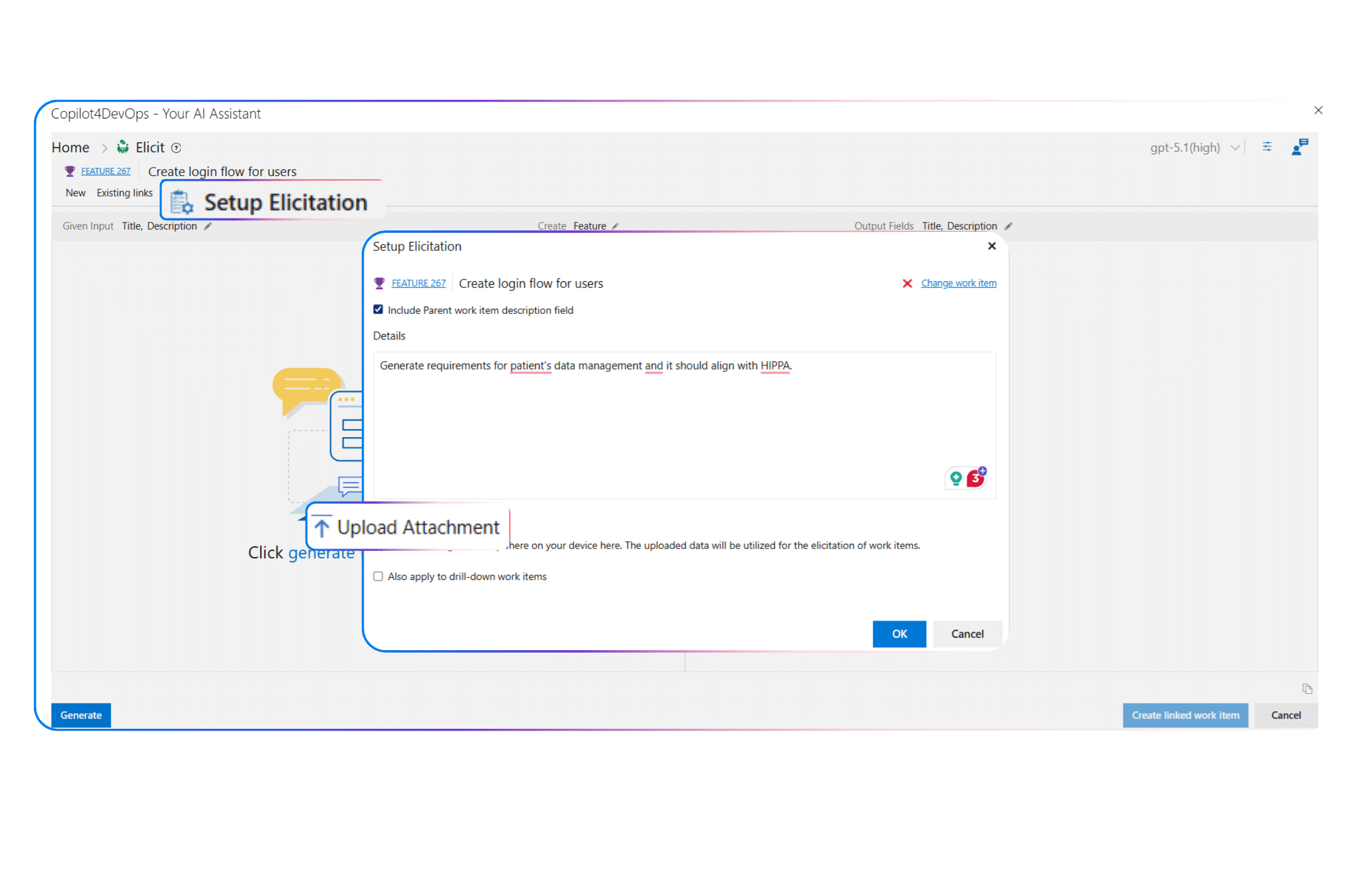
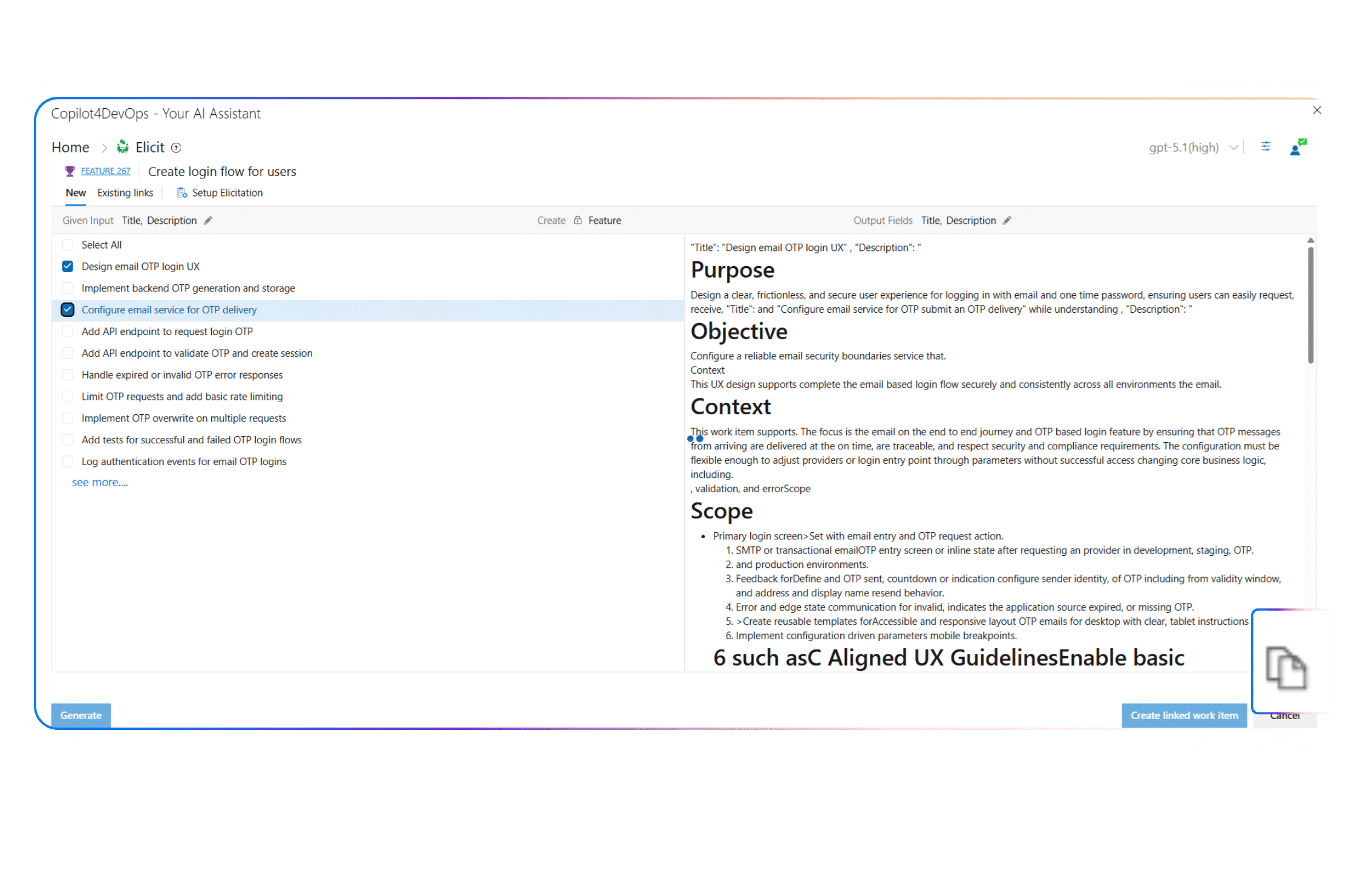
Setup Elicitation
Have documents or raw notes to start from?
Upload multiple types of files, including images, meeting notes, PDFs, documents, etc., to provide context to AI and draft requirements based on the uploaded material’s content.
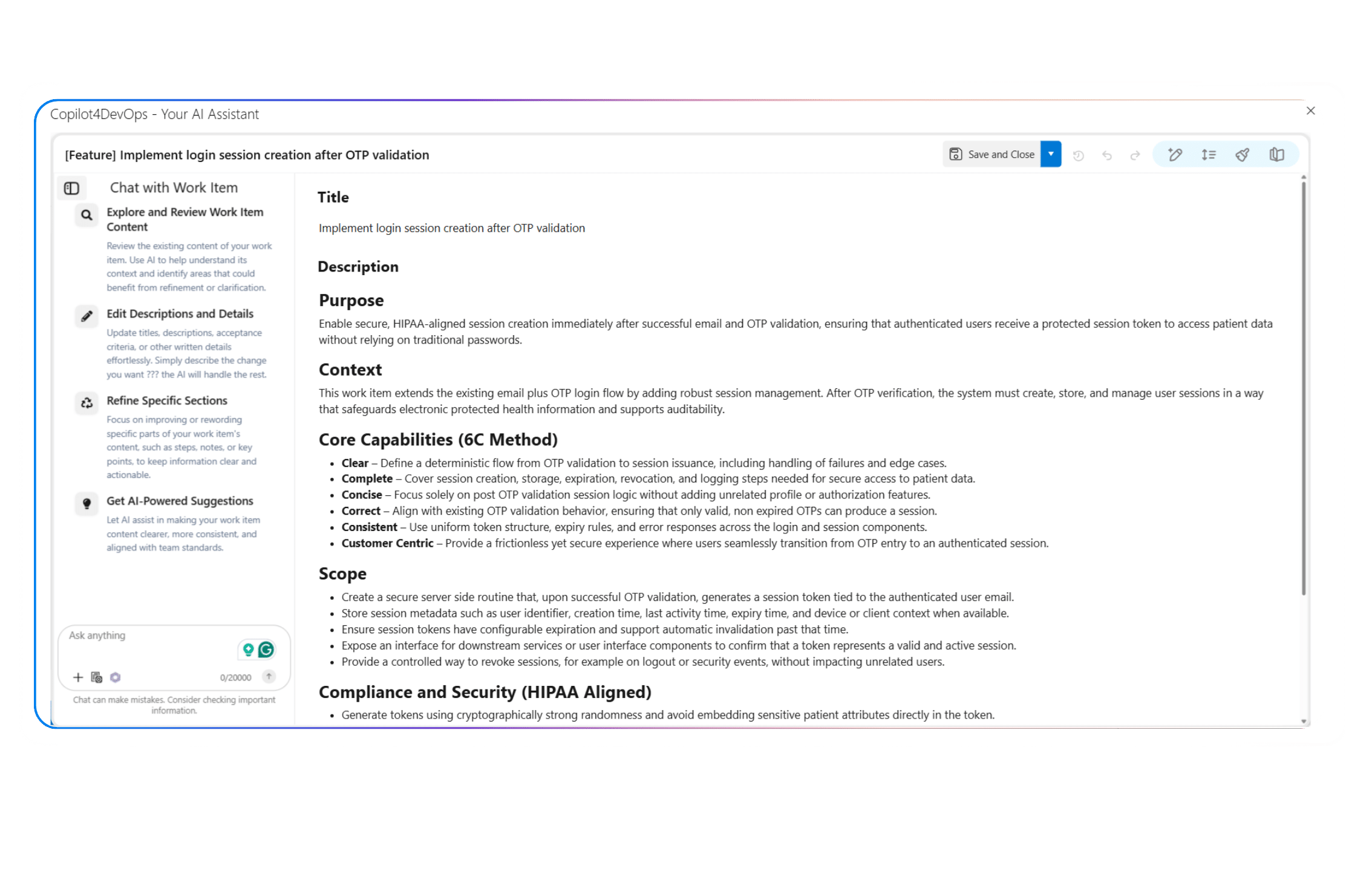
AI-Assisted Editing
Want to refine already generated requirements using AI?
Utilize the AI Edit function to improve grammar errors, simplify requirements descriptions, and change the length of work items. You can also edit work items by providing natural language instructions to AI.
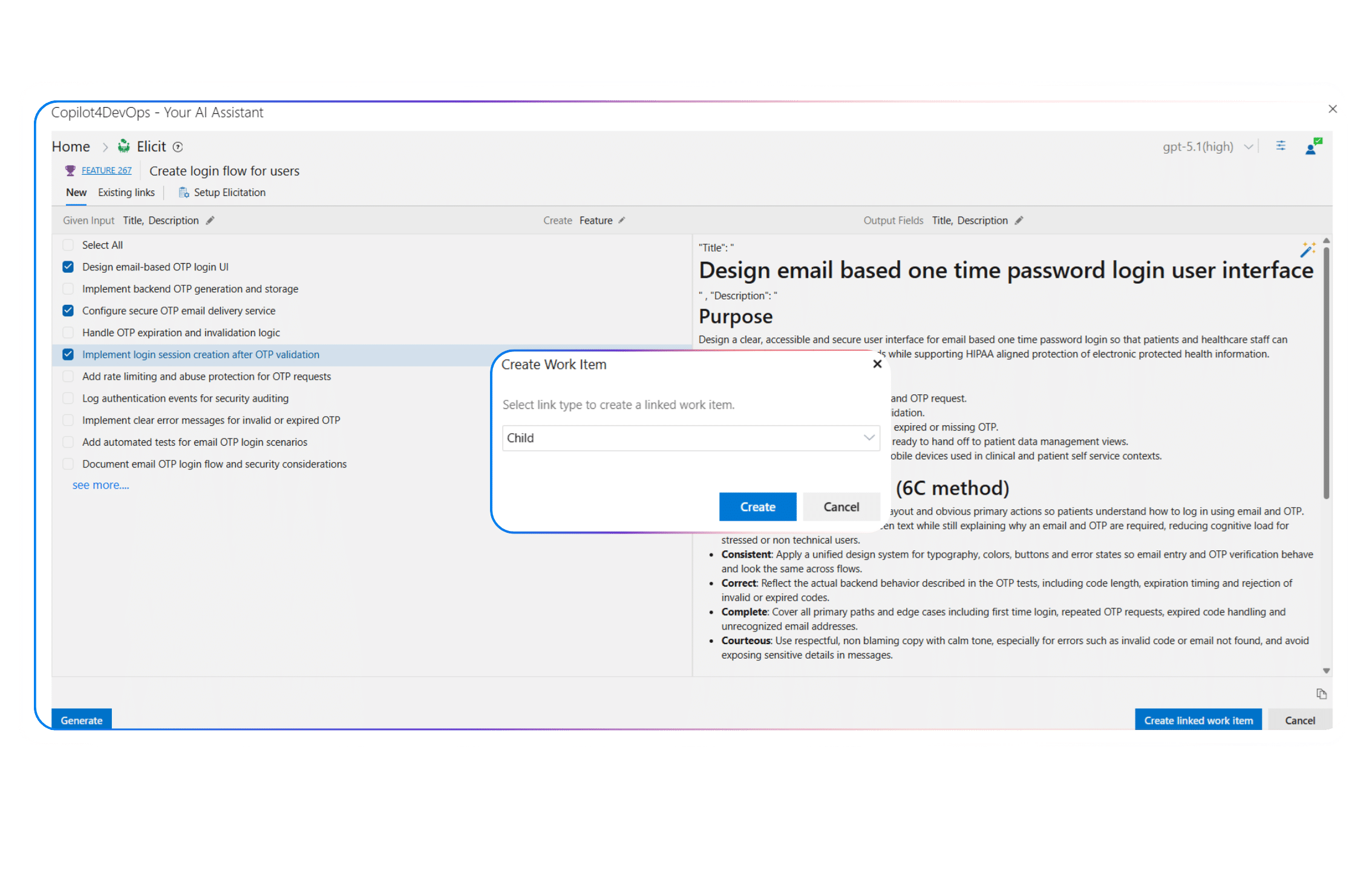
Create Linked Work Items
Want to insert generated work items into the ADO workspace?
Create work items directly from Elicit with predefined relationships. Stories, tests, and tasks are linked at creation, preserving hierarchy and context without extra configuration.
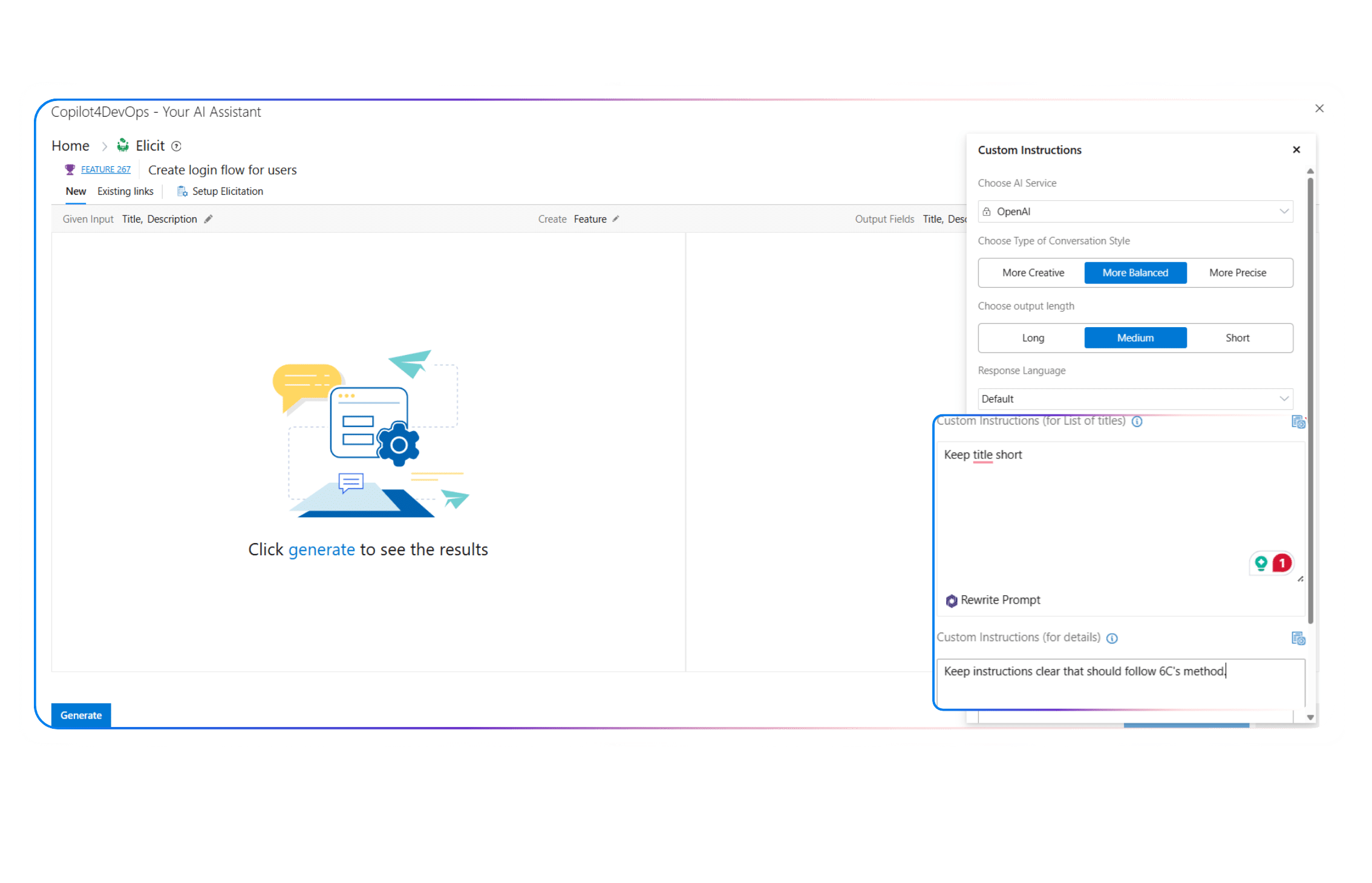
Custom Instructions
Need to generate requirements based on your organization’s guidelines?
Insert custom instructions to follow internal formats, naming rules, or writing style. Save reusable instructions as a text block to keep stories, tests, and tasks consistent across teams, projects, and releases.
One-Click Copy
Need to share the generated work item?
Use the copy button and share with external team members for a formal review or discussions.
Key benefits of using AI Elicit within Copilot4DevOps
Faster Start to Every Project
Azure DevOps teams can start a project without spending hours on requirements preparation.
No Detail Left Behind
As Elicit uses AI to suggest and write edge cases, teams don’t miss any important requirements.
Improved Accuracy
AI makes fewer mistakes than humans do, which improves the overall accuracy and quality of work items within Azure DevOps.
Built for Real Workflows
Generate work items directly within Azure DevOps and link them with existing work items.
Consistent, Reusable Output
When every team member uses the exact same rules and custom instructions to generate work items, AI produces consistent output. This keeps the work item format uniform across teams and projects.
Seamless Collaboration
Everyone, from business analysts and project managers to developers and testers, can use Elicit to write different types of work items and create a single connected backlog.
Top use cases in different industries
Insurance
- As a BA, I want to create the first draft of user stories with acceptance criteria that align with SOC 2 compliance from existing login-related feature work items within Azure DevOps.
- As a QA Engineer, I would like to generate test cases from existing user stories for claims validation rules to ensure the system follows required compliance.
- As a DevOps Engineer, I want to create deployment and monitoring tasks from high-level epics for a fraud detection module.
Healthcare & Medical Devices
- As a Clinical Systems Specialist, I use AI to draft epics from workflow notes for patient record access that follow HIPAA privacy and access control rules.
- As a Regulatory Affairs Manager, I use Elicit within ADO to convert FDA guidance and design control documents into structured work items and add them to Azure DevOps.
- As a Validation Engineer, I want to generate test cases for medical device software changes, covering normal use and failure scenarios required under ISO 13485.
Energy & Utilities
- As a Grid Operations Analyst, I use AI to generate user stories for real-time meter data ingestion based on operational procedures and regional reliability standards.
- As a QA Lead, I draft test cases for usage-based billing rules, including peak demand and seasonal pricing constraints.
- As a DevOps Engineer, I want to prepare tasks for the continuous deployment of energy-related services from a raw requirements document.
Banking & Finance
- As a Backend Developer, I want to break down transaction processing features into tasks that follow PCI DSS and regional banking regulations.
- As a System Lead, I use AI to draft requirements related to ledger updates from meeting notes.
- As a Project Manager, I create user stories to implement the KYC feature from a raw document and insert them into the Azure backlog.
Aerospace & Defence
- As a Requirements Engineer, I use Elicit to prepare user stories for flight control software that follows DO-178C rules.
- As a Configuration Management Officer, I want to draft change and review tasks linked to baselined requirements, maintaining evidence required for regulatory approval.
- As a Compliance Manager, I want to convert contractual and regulatory clauses into traceable backlog items so every delivery artifact maps to certification evidence.
Service & Technology
- As a Frontend Developer, I want to generate epics and features from the functional requirements document to implement UI for user onboarding.
- As a Customer Experience Manager, I want to generate feedback into implementable user stories using AI and add them to Azure DevOps.
- As a Data Protection Officer, I want to convert privacy requirements into actionable work items aligned with GDPR and internal data handling policies.
Railways
- As a Railway Systems Engineer, I want to generate user stories for signaling system updates that align with EN 50128 software lifecycle requirements.
- As a Train Control Specialist, I use Elicit within ADO to draft interlocking specifications requirements that are compliant with EN 50126 RAMS principles.
- As a Safety Case Author, I want to generate test cases from hazard logs to support safety arguments required under EN 50129.
Automotive
- As a Software Engineer, I use Elicit AI to draft user stories for an ECU diagnostic feature that follows ASPICE process expectations using system requirements.
- As a Functional Safety Manager, I use AI to transform raw information related to hazard and risk assessments into traceable requirements that align with ISO 26262 safety goals.
- As a Cybersecurity Architect, I want to generate security requirements and validation tasks based on UNECE R155 to ensure vehicle software resilience before release.
Government
- As a Records Management Lead, I use Elict to brainstorm feature ideas to develop a document management system and add them to the Azure backlog.
- As a Digital Services Program Manager, I draft requirements related to citizen portal enhancements that align with WCAG 2.1.
- As a Security Compliance Officer, I prepare security requirements based on NIST and ISO 27001 controls and link them with existing ADO work items.
Results teams see with Elicit
Your Questions are Answered Here
Does Elicit work inside Azure DevOps or as a separate tool?
Elicit is a key feature of Copilot4DevOps, and it directly works within Azure DevOps. The best part is that you can directly open it from any existing work item.
What kind of inputs can I use to generate requirements?
You can either pass existing work items as a reference or any kind of document, including PDFs, Word, image files, etc. Elicit reads the text content and generates structured work items based on it.
Can I control the tone or format of generated items?
Yes, it allows teams to pass custom instructions and rules while generating the work items. When you use the same rules, it always generates the work item content in a consistent tone and format.
How are generated items linked inside Azure DevOps?
Once you generate the work items using the Elicit feature, the “Create Linked Work Item” option allows you to choose the relationship type between newly generated work items and existing work items and add them to the Azure DevOps.
Does Elicit support industry-specific needs like compliance or audit trails?
Yes, it does. You can generate industry-specific compliance requirements using the Elicit feature. It ensures that any important requirements are not missed.
Is there a way to edit or refine generated content?
Yes, once you generate the content of work items, you can use the “AI Edit” feature to edit newly generated work items by providing natural language instructions.
Does Elicit require training data from our organization?
No, it doesn’t. Copilot4DevOps is SOC Type II certified, and it gives a guarantee that it doesn’t use any of your data. Also, all your data stays within your Azure DevOps environment, and Copilot4DevOps doesn’t store any.
What happens if requirements change later in the project?
In such cases, team members can reopen the same work item and regenerate or refine the stories and test cases to match the updated details.
Does Elicit generate edge requirements?
Yes, Elicit also suggests edge cases. So, you don’t miss anything.
See How Elicit Transforms the Way You Build Requirements
Utilize AI to turn scattered notes and documents into clear, connected work items, all within Azure DevOps.
Explore Relevant Features
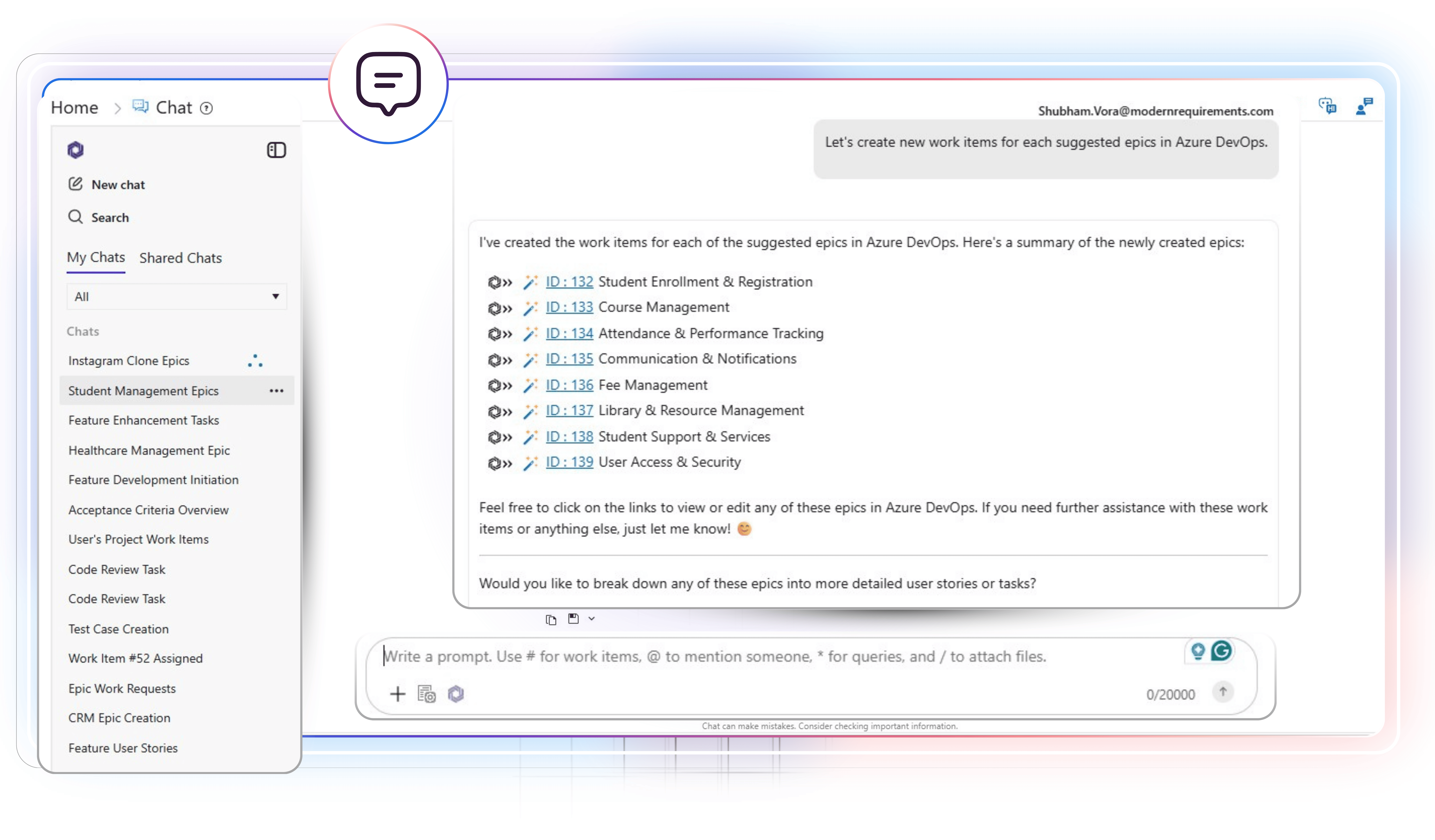
AI Chat
Manage Azure backlog through natural language
Use AI chat to interact with Azure DevOps work items using natural language prompts. To update multiple work items at once, just type something like, “Update status of all work items associated with the login module to completed,” and it's done.
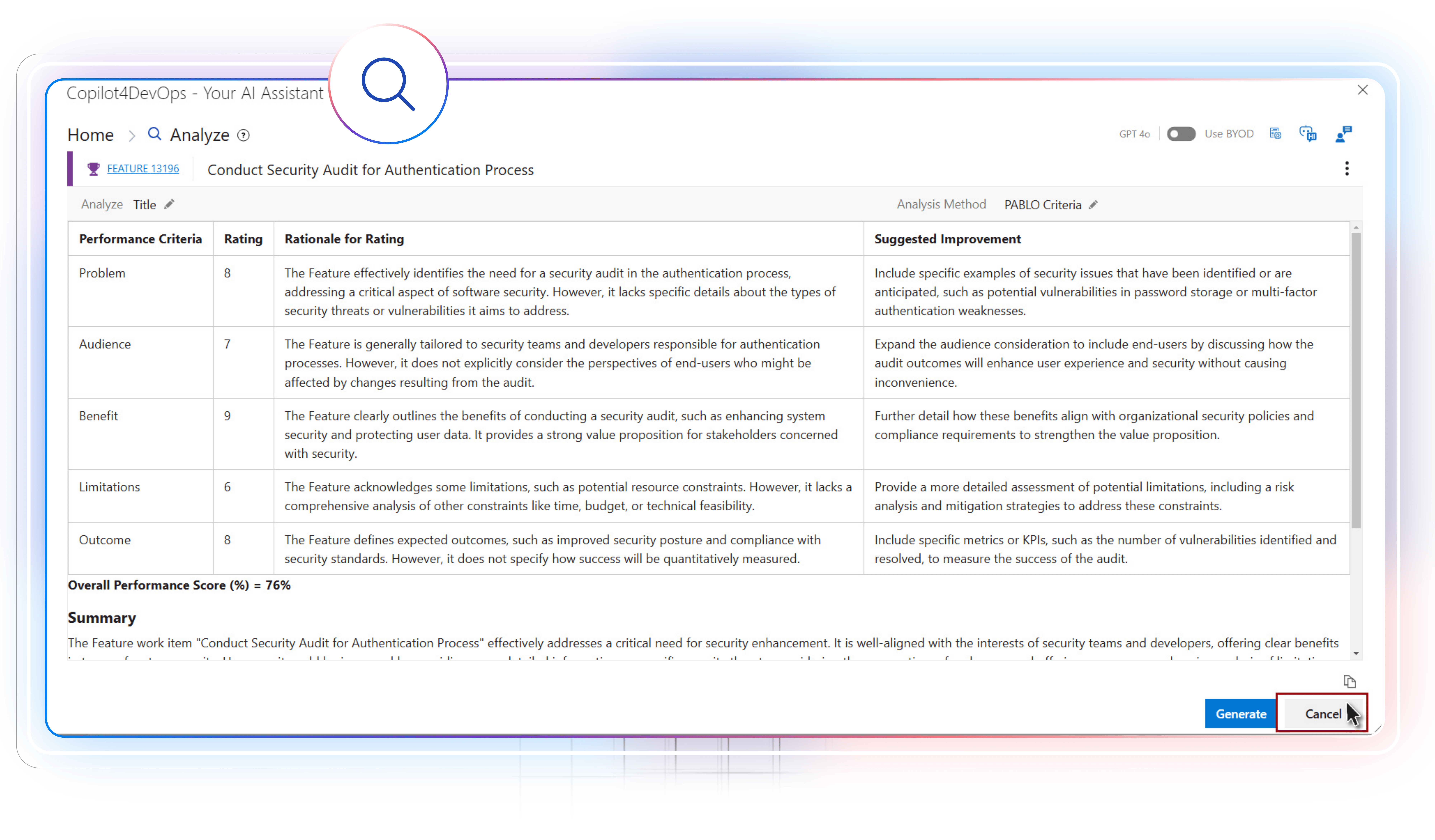
Analyze
AI for reviewing requirements
Analyze ADO work items against proven frameworks, such as MoSCoW, INVEST, PABLO Criteria, and the 6C’s method, using AI to find gaps and inconsistencies before any development starts.
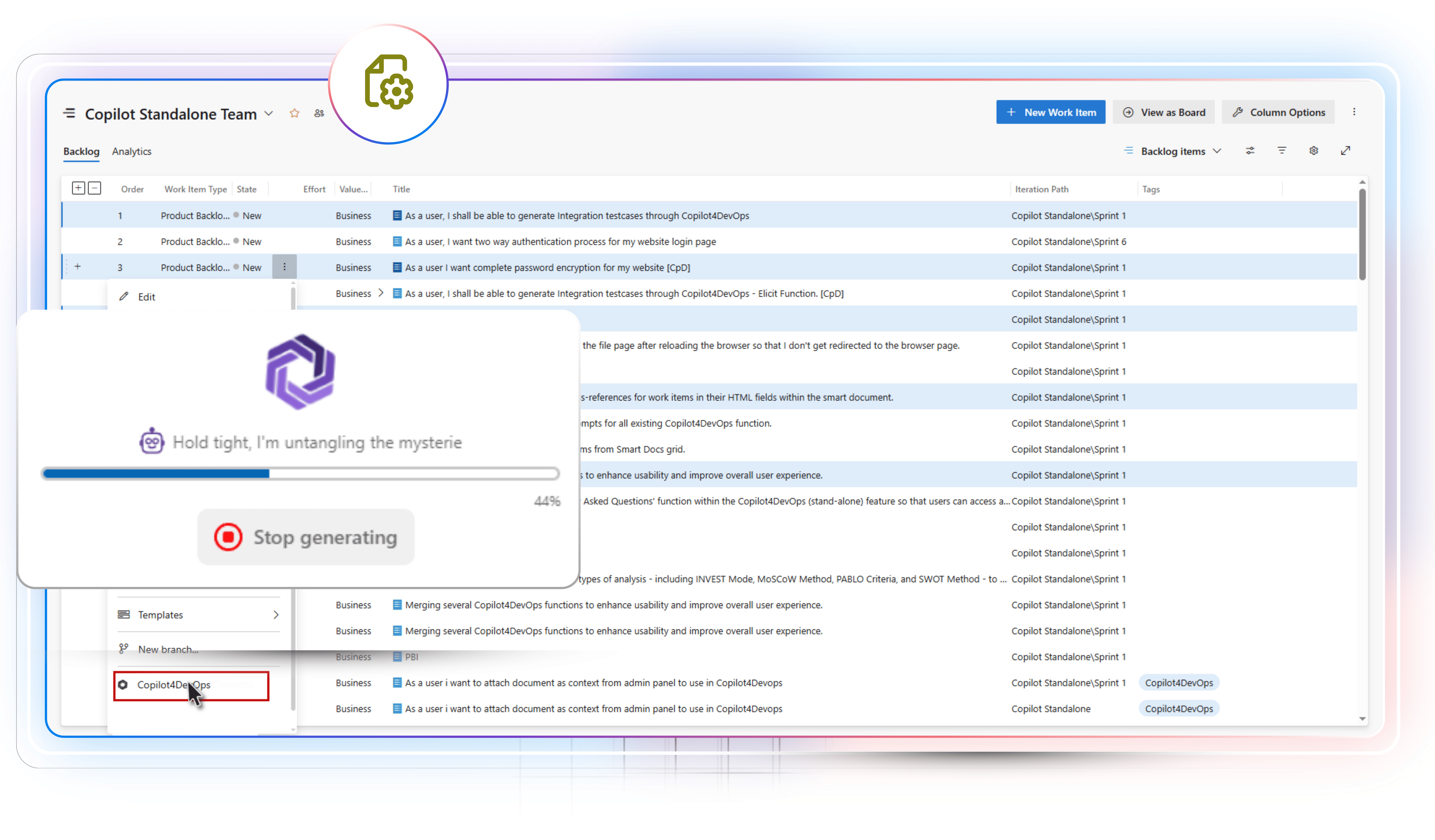
Generate
Turn work items into working code and test scripts
Produce ready-to-use pseudocode and test scripts in different programming languages by using the work item description.